How Much Does Custom Packaging Cost?
A real pricing breakdown for beauty brands
What does custom beauty packaging cost per unit?
Custom beauty packaging costs $0.30–15.00/unit depending on format. Folding cartons land at $0.50–3.00/unit. Rigid set-up boxes run $3.00–15.00/unit. Tubes, bottles, and jars range from $0.30–5.00/unit before decoration. Specialty finishes add $0.05–1.50/unit. The lowest quote is rarely the cheapest total cost once you factor tooling, freight, and defect rate.
Custom packaging for beauty brands typically costs $0.30–$15.00 per unit depending on the format, material, finish, and order volume. Folding cartons usually land around $0.50–$3.00 per unit. Rigid set-up boxes usually land around $3.00–$15.00 per unit. Tubes, bottles, and jars can range from $0.30–$5.00 per unit before decoration, pumps, caps, cartons, or inserts.
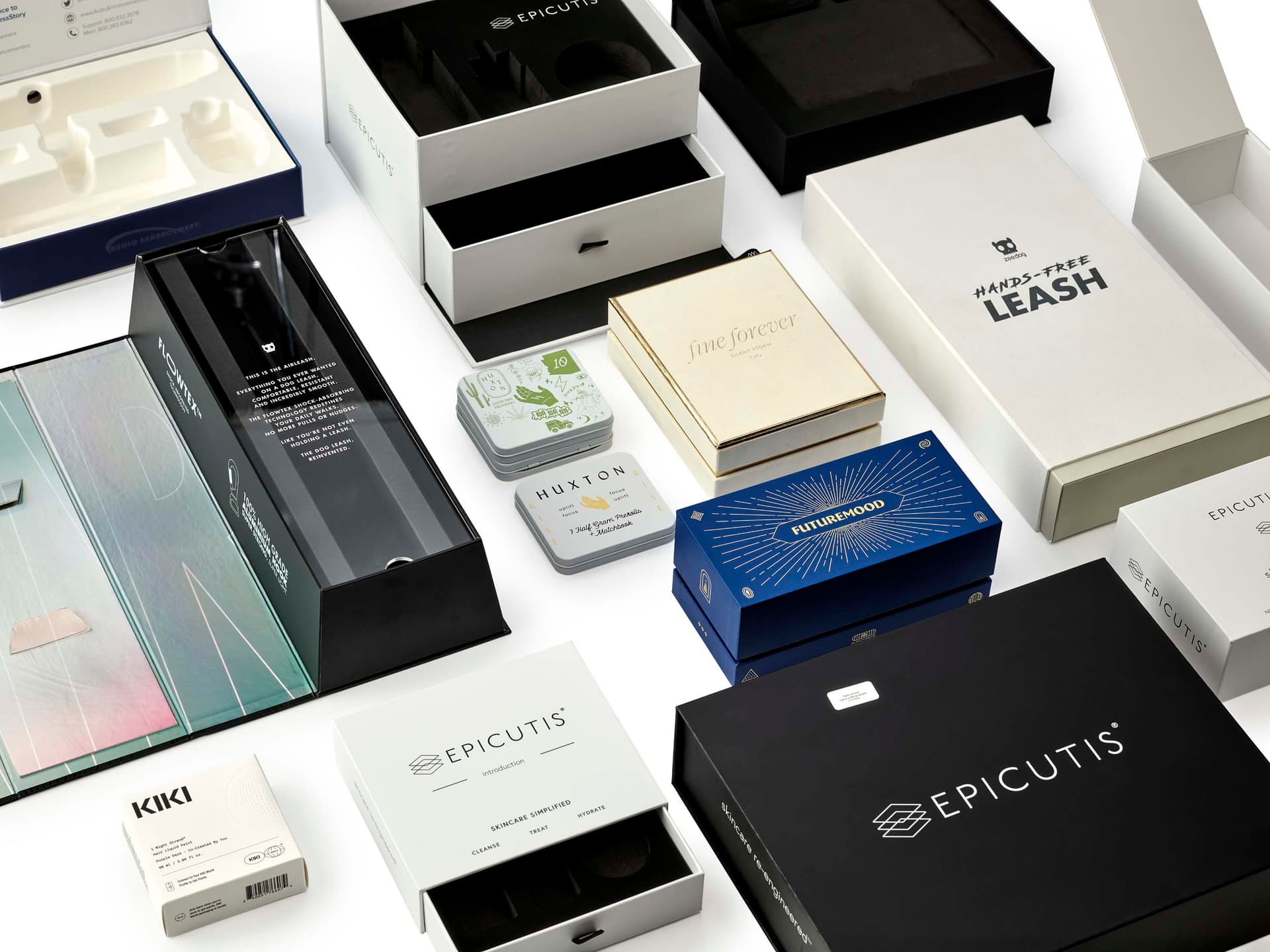
That range is wide because “custom packaging” is not one thing. A printed folding carton for a serum bottle is not priced like a rigid PR kit box with a magnetic closure, foil stamp, molded insert, and specialty paper wrap.
The mistake most beauty brands make is asking, “How much does custom packaging cost?” before defining what packaging has to do. The better question is: what format, material, finish, volume, and timeline will protect the product, carry the brand, and still work inside the margin model?
This guide breaks down the real cost drivers so you can compare quotes without guessing.
Key Takeaways
- Custom packaging for beauty brands usually ranges from $0.30–$15.00 per unit, depending on format and complexity.
- Folding cartons are the most cost-efficient custom format at $0.50–$3.00 per unit.
- Rigid boxes create the most premium experience, but usually cost $3.00–$15.00 per unit before freight.
- Specialty finishes like foil stamping, embossing, spot UV, and soft-touch coatings usually add $0.05–$1.50 per unit depending on coverage and setup.
- The lowest quote is rarely the cheapest total cost. Tooling, freight, defect rate, inserts, and redesign risk matter.
What Custom Beauty Packaging Actually Costs Per Unit
The fastest way to understand packaging cost is to separate the format from the finish. Format sets the base cost. Finish adds the brand effect. Volume decides whether the math works.
Folding Cartons: $0.50–$3.00 Per Unit
Folding cartons are the most common secondary packaging format for beauty brands. Think serum cartons, moisturizer cartons, fragrance sleeves, sunscreen boxes, supplement cartons, and retail-ready product boxes.
Typical cost range: $0.50–$3.00 per unit.
At the lower end, you are usually looking at standard paperboard, simple print, modest order volume, and limited finishing. At the higher end, you are adding thicker board, specialty paper, foil stamping, embossing, spot UV, soft-touch coating, interior print, or tighter color control.
Folding cartons make sense when the primary package already protects the product and the outer package needs to do three jobs: create shelf presence, carry compliance information, and tell the brand story.
They are usually the first custom format a beauty brand should price because they give you the most brand control for the least unit cost.
Rigid Set-Up Boxes: $3.00–$15.00 Per Unit
Rigid set-up boxes are the premium end of beauty packaging. Think influencer kits, holiday sets, discovery kits, luxury skincare boxes, fragrance sets, and product launch mailers.
Typical cost range: $3.00–$15.00 per unit.
The range moves quickly because rigid packaging has more components: wrapped board, closure structure, inserts, magnets, ribbons, pull tabs, trays, specialty papers, foam, molded pulp, or fabric lining.
A simple rigid box with a printed wrap may land near the low end. A multi-product PR kit with a custom insert, magnetic closure, foil stamp, and specialty paper can move toward the high end fast.
Rigid packaging is not where you go to save pennies. It is where you go when the packaging needs to create perceived value, drive social content, protect a kit, or support a higher price point.
Tubes, Bottles, and Jars: $0.30–$5.00 Per Unit
Primary packaging has the widest cost range because the format changes the physics. A stock PET bottle is not priced like a custom glass jar, airless pump, aluminum tube, or refillable compact.
Typical cost range: $0.30–$5.00 per unit before full decoration.
Simple stock bottles and tubes can be cost-efficient when the brand can work within available sizes, neck finishes, caps, and decoration areas. Custom molds, custom caps, airless systems, glass decoration, metal components, and PCR material requirements push the cost up.
This is where material decisions matter most. Glass feels premium but adds weight and breakage risk. PET is lighter and flexible but may not carry the same luxury signal. Aluminum can feel modern and recyclable but has denting and compatibility considerations. Molded fiber works well for protection and presentation, not for direct contact with liquids.
For a deeper comparison of material tradeoffs, use our Material Decision Framework.
Specialty Finishes: What Each One Adds to Unit Cost
Finishes are where beauty packaging starts to feel expensive. They are also where the brand often becomes visible.
Typical adders:
- Foil stamping: $0.05–$0.50 per unit for simple applications; more for large coverage or multiple foil colors
- Embossing or debossing: $0.05–$0.40 per unit after tooling
- Spot UV: $0.05–$0.30 per unit depending on coverage
- Soft-touch coating: $0.10–$0.60 per unit depending on substrate and quantity
- Specialty paper wrap: $0.25–$1.50+ per unit depending on material and structure
- Custom inserts: $0.20–$3.00+ per unit depending on foam, pulp, paperboard, or thermoform structure
The point is not to avoid finishes. The point is to choose the finish that creates the most brand value per dollar.
A small foil stamp on a clean carton may do more for perceived value than a fully coated box with three expensive effects fighting each other.
For finish-by-finish tradeoffs, see the Packaging Finish Guide.
What Drives Custom Packaging Cost Up
Packaging cost moves for predictable reasons. If you understand the cost levers, you can decide where to spend and where to simplify.
Volume: The MOQ Cliff
Volume is the biggest cost lever in custom packaging.
The first 500 units are expensive because setup, tooling, print preparation, sampling, and production planning are spread across a small run. At 5,000 units, those fixed costs spread out. At 50,000 units, the same structure may become a completely different unit economics story.
Typical minimums:
- Folding cartons: 500–1,000 units
- Rigid boxes: 500–1,000 units
- Influencer or PR kits: 50–100 units possible, better economics at 500+
- Custom molded primary packaging: often 5,000–10,000+ units depending on tooling
This is why the same box can cost $6.00 at 500 units and $2.75 at 5,000 units. The supplier is not playing games. The math changed.
Materials: Glass vs. PET vs. PCR
Material choice changes cost, freight, breakage, sustainability claims, and shelf perception.
Glass usually costs more to ship because it is heavy and fragile. PET is lighter, cheaper to freight, and easier to work with at scale. HDPE is practical for certain personal care formats but may feel less premium if the design is not handled well. Aluminum has a strong recyclability story but requires the right product compatibility and finish strategy.
PCR materials can add cost because supply is less predictable and quality can vary. That does not mean brands should avoid PCR. It means you need to price PCR honestly, test it early, and avoid building a sustainability claim on a material that cannot be sourced consistently.
The right material is not the one with the best story. It is the one that fits the formula, channel, margin, and brand position.
Our Material Decision Framework covers how to choose the right material by product category and channel.
Finishes: Foil, Spot UV, Embossing, and Soft Touch
Finishes add cost because they add passes, tooling, time, and quality-control risk.
Foil stamping needs dies and setup. Embossing needs tooling and pressure control. Spot UV needs registration. Soft touch can scuff if the substrate and coating are not matched correctly.
None of these are bad. They just need a reason to exist.
If your packaging already has a strong color system, shape, and material, one finish may be enough. If the structure is generic, three finishes will not save it.
The most cost-effective premium packaging usually comes from one strong structural decision and one controlled finish, not a pile of effects.
Tooling Fees: The One-Time Costs That Surprise First-Time Buyers
Tooling is the cost most first-time custom packaging buyers forget.
Tooling can include cutting dies, embossing dies, foil dies, molds, insert tooling, or custom structural setups. A simple folding carton die may be modest. A custom molded insert, pump component, or compact can become a real upfront cost.
Typical tooling ranges:
- Folding carton die: $150–$800
- Foil or emboss die: $100–$500 per design area
- Rigid box setup/tooling: $300–$1,500+
- Custom molded insert or primary mold: $1,000–$10,000+ depending on complexity
Tooling is not always bad. If the structure will be reused over multiple runs, tooling can reduce unit cost and protect consistency. The problem is paying tooling for a structure you have not tested, or changing the design after tooling has already started.
That is where cost gets wasted.
How to Compare Quotes From Packaging Suppliers
Most packaging quotes look clean until you compare them line by line. Then you realize the suppliers are not quoting the same thing.
One includes freight. One does not. One includes inserts. One assumes stock paper. One includes sample charges. One does not include the finish you asked for. One quote is lower because it quietly changed the board thickness.
This is how brands choose the “cheaper” quote and end up paying more.
The Three Numbers That Actually Matter
When comparing packaging quotes, look at three numbers first:
- Landed unit cost. Product cost plus freight, duties, tariffs, and delivery to your warehouse or 3PL. This is the number that hits margin.
- Total project cost. Unit cost plus tooling, samples, pre-production proofs, freight, and any fixed setup charges.
- Cost at reorder volume. The first run may be expensive. The reorder economics matter more if this becomes core packaging.
If a supplier only gives you an ex-factory unit price, you do not have the real number yet.
What a Good Packaging Quote Includes
A good packaging quote should tell you exactly what you are buying.
At minimum, it should include:
- Format and structure
- Dimensions
- Material and board thickness
- Print method
- Finish details
- Insert material, if included
- Quantity tiers
- Tooling charges
- Sample cost and timeline
- Production lead time
- Freight terms
- Delivery location
- Payment terms
If those details are missing, the quote is not finished. It is a placeholder.
The best way to get a clean quote is to send a clean brief. We built a Packaging Brief Template for exactly that reason.
Custom vs. Stock Packaging: When Each Makes Sense
Stock packaging makes sense when speed matters more than differentiation. If you need 500 units for a quick launch, a small test, or a short-term promotion, stock may be the right answer.
Custom packaging makes sense when the package is part of the product experience, shelf presence, or margin strategy.
Use stock when:
- You are testing a concept
- You need packaging in weeks, not months
- The packaging is not visible at retail
- The order quantity is too low to justify tooling
- Brand consistency is not the primary concern yet
Use custom when:
- The product will be sold at retail
- The unboxing experience matters
- You have multiple SKUs that need consistency
- You need a specific sustainability claim
- You are already paying premium prices for stock packaging
- You plan to reorder the same format
For many beauty brands, the problem is not that stock packaging is bad. The problem is staying in stock packaging too long.
At a certain point, you are paying custom prices for catalog limitations.
How to Reduce Packaging Costs Without Losing Brand Quality
The fastest way to reduce packaging cost is not to make everything cheaper. It is to stop paying for complexity that customers do not notice.
Start with these moves:
Standardize Structure Across SKUs
If every SKU uses a different carton size, insert style, finish, and material, you are paying for fragmentation. Standardizing the structure across multiple SKUs can reduce setup cost, improve reorder economics, and make quality control easier.
This does not mean every product looks identical. It means the system underneath the packaging is consistent.
Spend on One Signature Moment
Most beauty brands do not need five premium effects. They need one memorable one.
That might be a soft-touch carton with clean foil. A rigid box with a perfect insert. A custom closure. A color-matched liner. One strong decision usually beats five small ones.
Engineer the Insert Early
Inserts create cost when they are designed after the box. The team finishes the exterior, then realizes the product rattles, the component sits too low, or the kit needs foam to survive shipping.
Design the insert at the same time as the outer structure. It saves revision cycles and prevents overbuilding the package later.
Quote Multiple Quantity Tiers
Always quote at least three quantities: the minimum, the expected run, and the next volume tier. For example: 1,000, 3,000, and 5,000 units.
Sometimes the jump from 3,000 to 5,000 units changes the unit cost enough to justify a larger run. Sometimes it does not. You need the data before you decide.
Protect the Brand, Cut the Waste
The best cost reductions do not remove the part customers value. They remove the part nobody notices.
That might mean changing board thickness, consolidating suppliers, reducing unused air inside a kit, switching insert material, or moving from a fully wrapped rigid box to an engineered carton with the same shelf impact.
Our landed-cost planning guide walks through the full cost stack, from factory gate to warehouse shelf.
What Beauty Brands Should Budget Before Starting
Before you request quotes, build a realistic budget range. Not a wish number. A working number.
For a first custom packaging run, a beauty brand should usually budget for:
- Sampling: $100–$1,000 depending on structure and finish
- Tooling: $150–$1,500 for most cartons and rigid boxes; more for molded components
- Production: based on unit cost and quantity
- Freight: often 10–30% of product cost depending on weight, volume, origin, and speed
- Duties/tariffs: depends on material, country of origin, and classification
- Buffer: 5–10% for revisions, changes, or freight movement
If the budget only accounts for unit price, it is incomplete.
The unit price matters. The landed cost matters more.
Custom Packaging Cost FAQs
The Bottom Line
Custom packaging cost is not mysterious. It is a stack of decisions: format, material, finish, tooling, volume, freight, and timeline.
Beauty brands get into trouble when they treat packaging as a design expense only. It is also a margin decision. A launch decision. A retail decision. A customer-experience decision.
The goal is not to spend the least. The goal is to spend where the customer notices, simplify where they do not, and build a packaging system the brand can reorder without starting over every time. See how that works in practice: the Epicutis packaging program scaled to 21+ SKUs with verified cost savings, and the Artilect packaging reduction removed material without weakening the brand experience.
Book a packaging consultation and we will help you pressure-test the format, materials, finishes, and quantity before you commit to production.
Ready to Get a
Real Quote?
Book a 30-minute call. We'll give you realistic pricing for your specific product, volume, and finish requirements — not a range.