Luxury Beauty Packaging: What Separates Premium From Mass Market
What works and what doesn't
What separates luxury from mass market packaging?
Luxury beauty packaging is engineered from the structure outward — not decorated onto a standard box. Weight, closure resistance, insert precision, and finish hierarchy work together to create perceived value in the first half-second of handling. The structural premium accounts for most of the 3–5x cost increase over standard packaging. Invest in the bones first.
Luxury beauty packaging is not mass-market packaging with nicer materials. It is a fundamentally different design philosophy — one where structural weight, closure precision, finish layering, insert engineering, and sensory sequencing work together to create perceived value before the product is ever used. The difference is felt in the hand before it is seen by the eye.
That distinction matters because most beauty brands that try to “go luxury” focus on surface effects — adding a foil stamp, upgrading to a heavier board, choosing a darker color palette. Those are finish decisions, not packaging decisions. Real luxury packaging is engineered from the structure outward. The weight is intentional. The closure has resistance. The insert holds the product like it belongs there. The finish serves the architecture, not the other way around.
This guide breaks down what luxury beauty brands actually do differently at every stage of the packaging process, what the cost premiums look like, and where to invest if you want premium perception without premium waste.
Key Takeaways
- Luxury packaging starts with structure and weight — not finish effects. The most common “premium upgrade” mistake is adding finishes to a weak structure.
- Closure engineering (magnetic, friction-fit, soft-close) accounts for up to 20-30% of luxury packaging unit cost and is the single most tactile quality signal.
- Finish layering follows a hierarchy: substrate first, then one dominant effect, then one accent. Three or more competing effects degrade perceived quality.
- Luxury packaging typically costs 3-5x more per unit than standard packaging for the same product format, with most of the premium in structure and closure rather than decoration.
- Insert design is the most underestimated element — a luxury product in a rattling, poorly fitted insert feels like a return, not a gift.
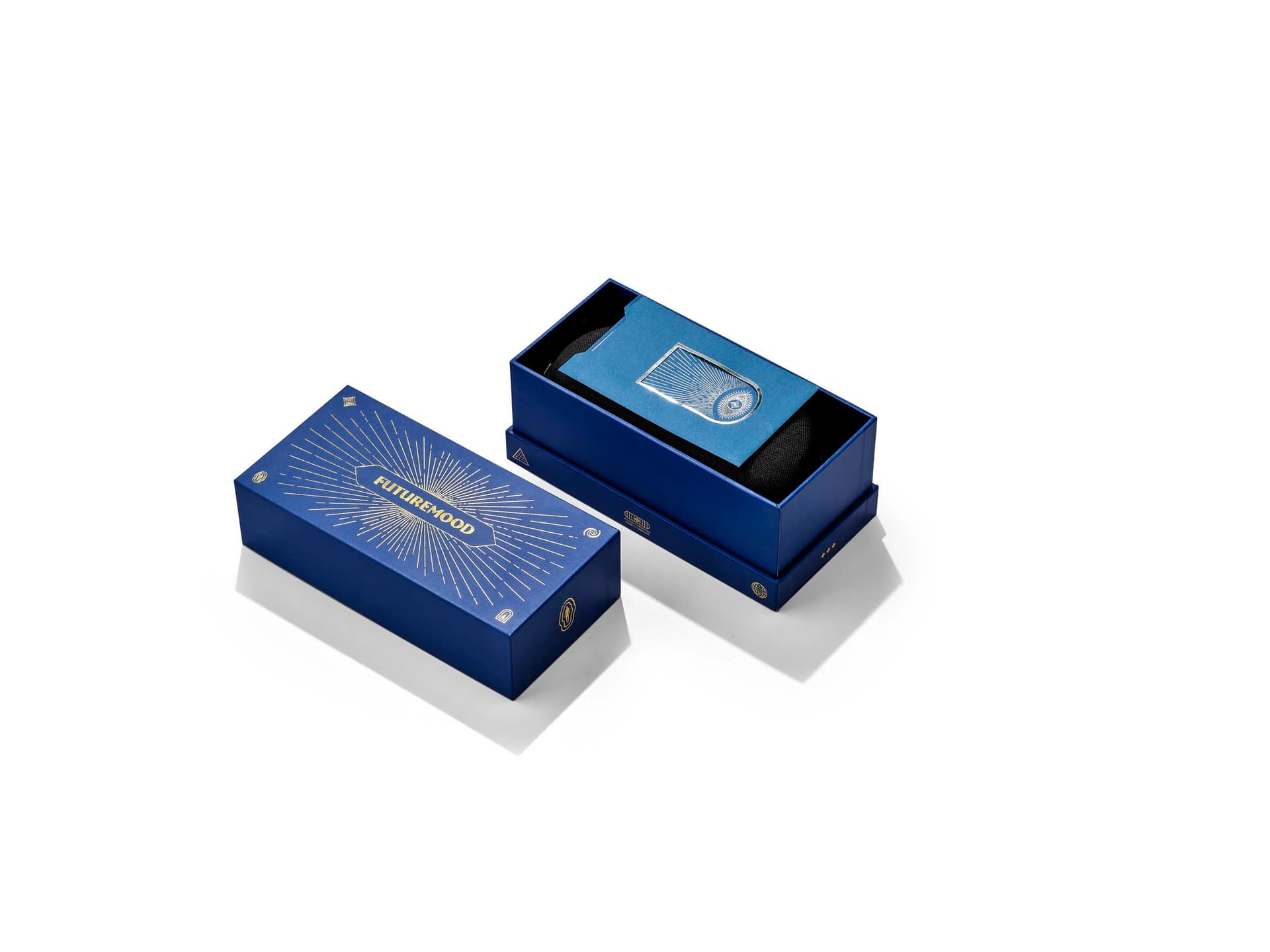
The Structural Foundation: Why Weight Is the First Luxury Signal
Pick up any mass-market beauty product. Then pick up a Chanel compact, a Tom Ford lipstick, or a La Mer jar. The difference registers in the first half-second — before you read the logo, before you see the finish. It is weight.
Luxury beauty packaging uses heavier substrates, thicker walls, denser materials, and more rigid construction than standard packaging. This is not accidental. It is the most reliable subconscious quality signal in physical products.
How weight is engineered
- Rigid boxes use thicker chipboard (1.5mm-2.5mm vs. 1.0mm-1.5mm for standard) wrapped with heavier paper stocks (120gsm-170gsm specialty papers vs. 80gsm-120gsm standard).
- Primary containers use heavier glass, thicker-walled plastics, or metal components specifically to add mass. A luxury foundation bottle may weigh 2-3x what a drugstore equivalent weighs — empty.
- Closures use zinc alloy, aluminum, weighted plastic, or over-molded construction to add heft specifically to the piece the consumer touches most.
Weight has a direct cost impact. Heavier materials cost more per unit and cost more to ship. A rigid box that weighs 180g empty costs meaningfully more to freight than one that weighs 90g, especially on international shipments. This is a real margin decision, not just a design preference.
The cost of structural weight
The structural premium for luxury-grade substrates and wall thicknesses typically adds 30-60% to the base packaging cost before any finish is applied. A folding carton that costs $1.20 at standard weight might cost $1.80-$2.00 at luxury weight. A rigid box that costs $4.00 at standard construction might cost $5.50-$7.00 at luxury spec.
That premium is non-negotiable if the brand positioning is luxury. Consumers can feel the difference between 300gsm and 400gsm board stock without knowing the number. They register it as quality or the absence of quality.
Closure Engineering: The Most Tactile Quality Signal
The closure is the component the consumer interacts with most, and it is where luxury packaging diverges most sharply from mass market. A luxury closure does not just close. It closes with a specific resistance, a satisfying click, a controlled deceleration.
Types of luxury closures
- Magnetic closures: Embedded magnets create a pull-and-snap that signals precision. Used in rigid boxes, compacts, and palettes. Magnet strength needs calibration — too weak feels cheap, too strong makes one-handed opening awkward.
- Friction-fit closures: Lids that slide on and off with controlled resistance, no click, no snap — just clean, slow engagement. Common in high-end skincare jars and candle packaging.
- Soft-close hinges: Hinges with damping mechanisms that prevent slamming. Used in premium compacts and jewelry-style boxes. The hinge stays open at presentation angle, then closes slowly.
- Weighted screw caps: Over-molded or metal-threaded caps with intentional mass and smooth threading. The rotation feels buttery, not gritty.
- Ribbon and tab pulls: Fabric or coated-paper pulls that reveal the product by lifting an interior tray or panel. Creates a two-stage reveal sequence.
What closures cost
Magnetic closures typically add $0.30-$1.50 per unit depending on magnet count, size, and housing. Soft-close hinge mechanisms add $0.50-$2.00 per unit. Weighted metal caps can add $0.80-$3.00 per unit over standard plastic alternatives.
These are significant per-unit costs. They are also the components consumers describe when they tell a friend “the packaging feels incredible.” Closure quality converts to word-of-mouth and social content more directly than almost any other packaging decision.
Finish Layering: The Hierarchy That Creates Depth
Luxury packaging uses finishes in layers, not in isolation. But the hierarchy matters. The most common mistake brands make when attempting luxury packaging is stacking too many effects — foil stamping plus embossing plus spot UV plus soft touch plus metallic ink — creating visual noise instead of visual depth.
The luxury finish hierarchy
1. Substrate first. The paper or material itself should feel premium before any effect is applied. Uncoated specialty papers with natural texture, cotton-fiber stocks, or tinted boards create a foundation that cheap substrates cannot replicate. This is the layer most brands skip.
2. One dominant effect. Choose one finish that carries the primary brand signal. For most luxury beauty brands, this is either soft-touch lamination (tactile luxury) or foil stamping (visual luxury). Not both competing for attention.
3. One accent effect. A secondary finish that supports the dominant one. Embossing under foil, spot UV on a matte surface, a debossed logo on a soft-touch field. The accent creates depth. It does not compete.
4. Nothing else. Three effects is a guideline maximum for luxury. After that, the surface becomes busy. Busy is not luxury. Restraint is.
For detailed cost and application data on every major finish type, see the Packaging Finish Guide.
Luxury finish combinations that work
- Soft-touch lamination + blind embossed logo + metallic foil accent type
- Uncoated textured stock + hot foil stamped logo + clean varnish seal
- Matte lamination + spot UV pattern + foil stamped wordmark
- Painted glass + screen-printed logo + weighted metal cap
Each combination uses two or three effects with clear hierarchy. The substrate does the heavy lifting. The dominant finish creates the brand moment. The accent adds dimension.
What luxury finishes cost
A luxury finish stack typically adds $0.50-$3.00 per unit over a basic printed surface, depending on the effects chosen and the area coverage. The finish premium is often smaller than the structural premium — which is counterintuitive but important. Most brands overspend on finishes and underspend on structure. Luxury brands do the opposite.
Sensory Sequencing: Designing the Unboxing as an Experience
Luxury packaging does not just look premium in a photograph. It unfolds in a specific sensory sequence — a choreographed experience from the moment the consumer picks up the box to the moment they touch the product.
The unboxing sequence
1. First touch. The consumer picks up the box. They register weight and surface texture. This is where structural weight and substrate choice pay off. 2. Closure engagement. They open the box. The magnetic pull, the friction resistance, the lid lift. This is where closure engineering pays off. 3. First reveal. The lid opens and the interior is visible. The insert, the tissue, the product position, the color of the inner surface. This is where insert design and interior finishing pay off. 4. Product extraction. They lift the product from its housing. The fit is precise — not too tight, not loose. The product feels held, not packed. 5. Secondary discovery. A card, a message, a secondary compartment, a hidden detail. Something that rewards attention. Not required, but when done well, it drives social sharing.
Mass-market packaging does not sequence. The product is accessible immediately with minimal interaction. Luxury packaging adds controlled friction — intentional steps that slow the consumer down and create anticipation.
Designing the sequence
Each step needs to be prototyped and tested physically. Digital renders do not capture tactile experience. A prototype that opens beautifully but ships poorly is not luxury — it is fragile. A sequence that works on a sample table but frustrates a consumer opening their third product is overengineered.
We prototype sensory sequencing during the sampling phase. If you are planning a project where the unboxing matters, start with our Concept to Shelf Timeline to understand how sampling and iteration fit into the production schedule.
Insert Design: The Invisible Architecture of Luxury
The insert is the component most brands think about last and regret first. A luxury product sitting in a generic foam cavity, shifting during transit, or sitting below the box edge undermines every other investment in the packaging.
What luxury inserts do differently
- Precision fit. The product is held with 0.5-1.0mm tolerance, not rattling in an oversized cavity. This requires dimensional accuracy in both the insert and the product.
- Presentation angle. The product is displayed at an intentional angle and height when the box opens. In a kit, products are staggered or tiered for visual composition.
- Material selection. Luxury inserts use flocked EVA, suede-lined paperboard, molded fiber with smooth finish, or custom thermoform with painted or coated surface. Unfinished white foam or bare corrugated is not a luxury insert.
- Multi-product coordination. Kits and sets need inserts that hold products of different sizes, shapes, and weights in one coherent presentation. This is engineering, not decoration.
Insert cost
Luxury inserts typically add $0.50-$4.00 per unit depending on material, complexity, and product count. A simple flocked single-product insert may be near the low end. A multi-product tiered insert with mixed materials can approach or exceed the outer box cost.
The insert is also where first-time buyers get surprised by tooling. Thermoformed and molded fiber inserts require tooling ($500-$3,000), which adds front-loaded cost that improves per-unit economics only at volume.
What Luxury Packaging Actually Costs: The Premium Math
Luxury beauty packaging typically costs 3-5x more per unit than standard packaging for the equivalent product format. Here is how that premium stacks:
| Component | Standard | Luxury | Premium | |–-|–-|–-|–-| | Rigid box structure | $3.00-$5.00 | $5.50-$9.00 | +40-80% | | Closure | $0.10-$0.30 | $0.50-$2.00 | +3-6x | | Finish stack | $0.20-$0.80 | $0.80-$3.00 | +2-4x | | Insert | $0.30-$1.00 | $1.00-$4.00 | +2-4x | | Total unit | $3.60-$7.10 | $7.80-$18.00 | ~2-3x |
These numbers are for rigid box formats. Folding carton luxury premiums are smaller in absolute terms but proportionally similar.
The question is not “can we afford luxury packaging?” It is “does the retail price and margin model support the packaging investment?” A $150 skincare set can absorb $15 in packaging. A $35 lip product usually cannot.
For detailed cost benchmarks across all formats, see the custom packaging cost breakdown.
Enterprise-Grade Luxury: How Major Brands Approach Packaging
We have produced packaging for brands like Adidas, Disney, Vans, Puma, Spotify, and Target. While we do not share case study details without authorization, the patterns across enterprise luxury packaging projects are consistent and instructive.
What enterprise brands get right
- They brief structure before decoration. The structural engineering is locked before any finish conversation begins. Most emerging brands do the opposite.
- They prototype aggressively. Three to five rounds of physical samples before production approval is normal, not excessive.
- They test at scale conditions. A sample that performs on a table is not approved until it survives palletized shipping, warehouse handling, and retail shelf conditions.
- They budget for the system, not the unit. The packaging investment is planned across the full SKU assortment, not optimized product by product.
- They simplify for consistency. Enterprise luxury often uses fewer effects more precisely rather than more effects per surface.
These are discipline patterns, not budget patterns. A brand doing 3,000 units can apply the same thinking as one doing 300,000 units. The structure-first, prototype-heavy, restraint-driven approach scales in both directions.
Common Luxury Packaging Mistakes
Stacking effects instead of building structure
Three premium finishes on a lightweight box still feels like a lightweight box. Weight and closure quality create more luxury perception than surface effects. Invest in the bones first.
Designing the box before the insert
The exterior gets approved, then the team realizes the products do not fit cleanly, the insert needs to be rushed, and the final presentation suffers. Insert engineering should happen in parallel with exterior design.
Ignoring secondary packaging
A beautifully crafted rigid box that arrives in a plain brown shipper with no protection creates a jarring experience. The shipping carton, the tissue, the seal — everything the consumer sees between the doorstep and the product — is part of the luxury system.
Confusing luxury with complexity
Luxury is not the most complicated packaging. It is the most intentional. Some of the most effective luxury packaging we have produced uses a single material, a single finish, and a perfect closure. Nothing more.
To see examples of how we approach luxury projects, visit the Logic Pac portfolio.
Luxury Beauty Packaging FAQs
What to Do Next
Luxury packaging development starts with a structure conversation, not a mood board. Before committing to finishes or materials, define the weight, the closure, and the insert architecture. Everything else follows. See how a prestige skincare brand built a coordinated luxury packaging system in the Epicutis case study.
Book a consultation and we will help you define the structural foundation, finish hierarchy, and cost model for your luxury packaging project.
*About the author: Jordan Harper is the founder of Logic Pac and Logic Agency, with 20+ years of experience in packaging development and supply chain operations for beauty, wellness, and consumer product brands.*
Ready to Design Your
Packaging?
Book a 30-minute call. We'll give you a straight answer — not a sales pitch.