Skincare Packaging Design
How to choose the right format, material, and finish
How do you choose skincare packaging?
Start with the formula, not the mood board. Serums, moisturizers, cleansers, oils, and SPF products each need different barriers, dispensing systems, and materials. The package must protect the formula, support the brand positioning, and survive the sales channel. Glass feels premium but adds weight, breakage risk, and freight cost. Match the structure to the formula requirements first.
Skincare packaging design starts with the formula, not the mood board. Serums, moisturizers, cleansers, oils, balms, and SPF products all need different barriers, dispensing systems, materials, and secondary packaging. The right package protects the formula, supports the brand, and works in the channel where the product will sell.
The mistake is treating skincare packaging like decoration. It isn't. The package is part of the product experience and part of the supply chain.
A beautiful jar that leaks is bad packaging. A recyclable bottle that makes the formula unstable is bad packaging. A perfect carton that can't survive retail handling is bad packaging.
Good skincare packaging does all three jobs: formula fit, brand fit, and channel fit.
Key Takeaways
- Skincare packaging should be chosen by formula type first: serum, moisturizer, cleanser, oil, balm, SPF, or treatment.
- Glass feels premium, but PET, HDPE, PP, aluminum, and airless systems often work better for weight, breakage, and cost.
- Airless packaging can protect sensitive formulas, but it adds cost and requires compatibility testing.
- Secondary packaging matters for retail: shelf readability, compliance copy, carton strength, and color consistency all affect sell-through.
- Clean beauty packaging should be specific, not vague. Material, refillability, PCR, FSC, and recyclability claims need proof.
What Makes Skincare Packaging Different?
Skincare packaging has to protect a formula that may be sensitive to oxygen, light, moisture, microbes, temperature, or consumer handling. That makes the packaging decision more technical than it looks.
Color cosmetics can often prioritize form factor and application ritual. Fragrance can lean into glass, weight, and display value. Skincare has to start with compatibility.
The first questions are operational:
- Does the formula react to oxygen?
- Does it need UV protection?
- Is the viscosity thin, thick, sticky, oily, or volatile?
- Does the product need controlled dosing?
- Will the customer use it in a bathroom, travel bag, shower, or vanity?
- Does the package need to sit upright, hang, squeeze, pump, spray, or scoop?
- Is the product sold DTC, on shelf, in spa channels, or through retail?
Those answers decide the format before the design team picks a finish.
Serum Packaging: Droppers, Airless Pumps, and Small Bottles
Serums usually need precision, barrier performance, and a premium feel. The most common formats are glass dropper bottles, airless pumps, and small PET or PP bottles with controlled dispensing.
When Glass Droppers Work
Glass droppers work when the formula is stable, the product position is premium, and the brand wants a clinical or apothecary cue. They photograph well. They feel familiar to skincare buyers. They also come with tradeoffs.
Glass is heavier, more breakable, and more expensive to ship. Droppers add component complexity. The bulb, pipette, collar, and wiper all need compatibility checks.
Use glass droppers when the sensory and brand value justify the freight and breakage risk.
When Airless Pumps Work Better
Airless systems work when the formula needs less exposure to air or fingers. They are useful for actives, higher-value treatments, and products where controlled dosing matters.
Airless packaging usually costs more than a simple bottle. It also needs more testing: fill compatibility, pump performance, evacuation rate, leakage, and decoration durability.
The benefit is protection and user experience. The risk is overbuilding.
If the formula does not need airless performance, don't pay for airless theater.
For a material-level comparison, see the Material Decision Framework.
Moisturizer Packaging: Jars, Tubes, and Airless Systems
Moisturizers usually fall into three formats: jars, tubes, and airless pumps.
Jars
Jars work for rich creams, balms, masks, and products where the tactile ritual matters. Glass jars feel premium. PP or PET jars can reduce weight and breakage. Double-wall jars add visual weight without always adding product volume, so the cost and sustainability story should be considered carefully.
The downside is exposure. Every time a customer opens the jar, the formula meets air and fingers. That may be acceptable for some formulas and wrong for others.
Tubes
Tubes work for moisturizers, cleansers, masks, SPF, and travel-friendly formats. They are cost-efficient, lightweight, and easy to use.
The tradeoff is perception. A tube can feel mass or premium depending on decoration, cap choice, shoulder shape, material, and print quality.
Soft-touch finish, metallic details, matte caps, and clean typography can elevate a tube without moving into a heavier structure.
Airless Pumps
Airless pumps work for moisturizers when the formula or brand position justifies the cost. They offer cleaner dispensing and less consumer contact with the product.
The key is testing. Pump performance can vary with viscosity. A beautiful airless package that dispenses poorly will create more customer frustration than a simpler tube.
Cleanser Packaging: Pumps, Bottles, and Squeeze Tubes
Cleansers are often higher-volume products, so packaging cost and freight matter more.
Common formats:
- PET bottles with pumps
- HDPE bottles with flip caps
- Squeeze tubes
- Refillable pouches
- Aluminum bottles for specific sustainability positions
PET is the workhorse when clarity, weight, and cost matter. HDPE works well for durability and opacity. PP can work for caps and closures. Aluminum can support a strong recyclability story, but denting and formula compatibility need review.
For cleansers, the package has to work wet. Shower use, slippery hands, cap durability, label performance, and pump reliability all matter.
That is why we test the use environment, not just the shelf photo.
SPF and Treatment Packaging Need Extra Discipline
SPF, acne treatments, retinoids, vitamin C, and other active formulas usually need tighter packaging discipline.
Watch for:
- UV exposure
- Oxygen sensitivity
- Formula interaction with plastics or liners
- Regulatory labeling space
- Dosing accuracy
- Seal integrity
- Tamper evidence
This is where packaging and compliance meet. The carton may need more copy. The label may need more surface area. The primary package may need opacity or barrier properties. The cap or pump may need stricter testing.
Don't force a high-risk formula into a trendy package.
Start with performance. Then make it beautiful.
Secondary Packaging for Skincare: Cartons, Sleeves, and Sets
Secondary packaging carries the shelf story. It also protects the primary package and gives the brand room for claims, directions, warnings, and retail requirements.
For skincare, secondary packaging usually includes:
- Folding cartons
- Sleeves
- Rigid sets for hero SKUs
- Discovery kits
- Holiday sets
- Retail cartons with inserts
The best skincare cartons are easy to read at five feet, clear at one foot, and precise in the hand. That means hierarchy matters.
Front panel:
- Brand
- Product name
- Product type
- Key benefit or active
- Net contents
Side or back panels:
- Claims
- Directions
- Ingredients
- Warnings
- Sustainability notes
- Retail barcodes and compliance needs
The carton is not just a canvas. It is a communication tool.
For kickoff structure, use the Packaging Brief Template.
Material Selection for Skincare Packaging
Skincare brands usually choose between glass, PET, HDPE, PP, aluminum, and paperboard systems.
Glass
Glass works for premium serums, oils, fragrance-adjacent products, and creams where weight supports perceived value. It is less ideal for high-volume DTC products where breakage and freight costs can hurt margin.
PET
PET is lightweight, clear, recyclable in many systems, and cost-efficient. It works well for cleansers, toners, mists, and some serums. It is often the practical choice when a brand needs scale.
HDPE
HDPE is durable, opaque, and useful for personal care and higher-volume products. The perception gap is real: it can feel practical unless the shape, closure, label, and finish are handled well.
PP
PP is common in caps, jars, closures, and certain primary packaging formats. It is useful when flexibility, durability, or closure performance matters.
Aluminum
Aluminum can support a strong sustainability and modernity story. It works best when denting, lining, and formula compatibility are addressed early.
Paperboard
Paperboard drives most secondary packaging. FSC-certified board, clean structure, and controlled finishes can make skincare packaging feel premium without adding unnecessary plastic.
For finish selection, see the Packaging Finish Guide.
Retail Shelf Requirements for Skincare
Skincare packaging that works online may fail on shelf.
DTC packaging can be quiet. Retail packaging has to communicate faster.
Retail asks for:
- Clear product type
- Strong benefit hierarchy
- UPC and compliance placement
- Carton durability
- Case pack consistency
- Shelf-ready dimensions
- Color consistency across SKUs
- Easy differentiation between variants
The biggest mistake is designing every SKU like a standalone product. Retail buyers and consumers see the line together. The system needs family resemblance and SKU clarity.
Same brand. Different products. Clear hierarchy.
That's the balance.
Clean Beauty Packaging Claims Need Specifics
“Clean” is already hard to define in formulas. It gets even harder in packaging.
For packaging, clean beauty claims should be specific:
- FSC-certified paperboard
- 30% PCR PET
- Mono-material PP jar
- Refillable pod system
- Plastic-free secondary carton
- Soy-based inks where verified
- Reduced packaging weight by format
Avoid broad claims unless you can back them up. “Sustainable packaging” is weaker than “FSC-certified carton with no plastic window.” “Eco-friendly bottle” is weaker than “50% PCR PET bottle.”
Specificity builds trust. Vague claims create risk.
Cost Planning by Skincare SKU Type
Skincare packaging cost depends on format, decoration, and volume. The easiest way to plan is to group SKUs by packaging complexity instead of treating every product the same.
Low-Complexity SKUs
Examples: simple cleansers, toners, basic body care, uncomplicated tubes.
These usually use stock or semi-custom bottles, tubes, caps, and cartons. The brand work happens through decoration: label, print, carton, finish, and color system. This is where PET, HDPE, and standard tubes often make sense.
The cost risk is overdecorating. A low-complexity SKU should not carry a premium packaging system unless the margin supports it.
Mid-Complexity SKUs
Examples: serums, moisturizers, oils, masks, treatments with more premium positioning.
These may use glass, custom decoration, airless components, specialty caps, cartons, or inserts. The packaging needs more testing and tighter brand control.
This is where most skincare brands need the most discipline. One signature finish can lift the package. Three finishes can inflate cost without improving the shelf read.
High-Complexity SKUs
Examples: refillable systems, multi-product kits, SPF, active treatments, luxury sets, or retail launch collections.
These require more time, more sampling, and more supplier coordination. The unit cost is only one number. Tooling, compatibility testing, freight, kitting, and defect risk matter just as much.
For high-complexity skincare, build the packaging budget before the design direction is locked. Otherwise the team falls in love with a structure the margin can't support.
Samples and Testing: Where Skincare Packaging Gets Real
Renderings are useful. Samples are where the truth shows up.
Before production, skincare brands should test:
- Formula compatibility with the primary package
- Pump, dropper, cap, or closure performance
- Leak resistance
- Label adhesion and scuffing
- Carton compression and transit performance
- Decoration durability
- Shelf set readability
- Color consistency across SKUs
The sample stage is not a formality. It is the cheapest place to find problems.
A pump that sticks during sampling is fixable. A pump that sticks after 30,000 filled units is a customer service problem. A carton that scuffs in transit during testing is annoying. A carton that scuffs on a retail shelf is a brand problem.
This is why we prefer packaging decisions that can be sampled, touched, filled, shipped, and inspected before mass production starts.
Skincare Packaging FAQs
The Bottom Line
Good skincare packaging starts with the formula and ends with the customer experience.
The right structure protects the product. The right material supports the claim. The right finish makes the brand feel intentional without overbuilding the cost.
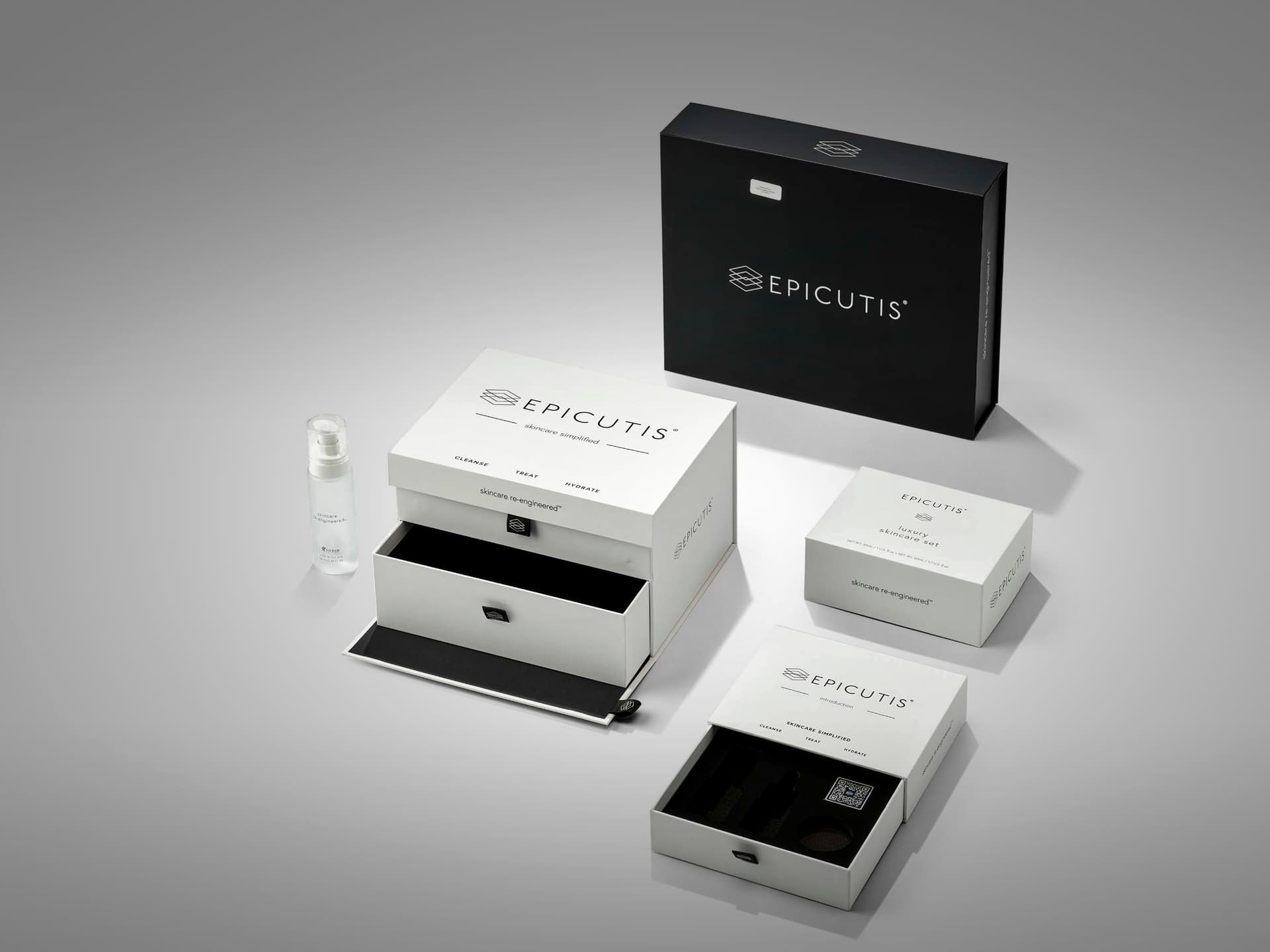
If you're planning a skincare launch or redesign, we can help map the format, material, finish, and cost tradeoffs before production starts. See how we built a coordinated skincare packaging system supporting 21+ SKUs in the Epicutis case study.
Book a skincare packaging consultation and we'll help you build the package around the formula.
Planning a Skincare
Launch?
Book a 30-minute call. We'll help you choose the right format, material, and finish for your formula — not just your mood board.