Sustainable Jewelry Packaging: Materials, Costs, and Compliance
Materials, costs, and compliance for jewelry brands
Regulatory and certification sources verified as of .
How do jewelry brands make packaging sustainable?
Start with the material system, not the finish. FSC-certified paper, recycled paperboard, molded fiber inserts, and mono-material construction give jewelry brands specific, provable claims. The biggest sustainability gains usually come from reducing the system — smaller boxes, lighter inserts, fewer mixed materials — which also cuts freight cost.
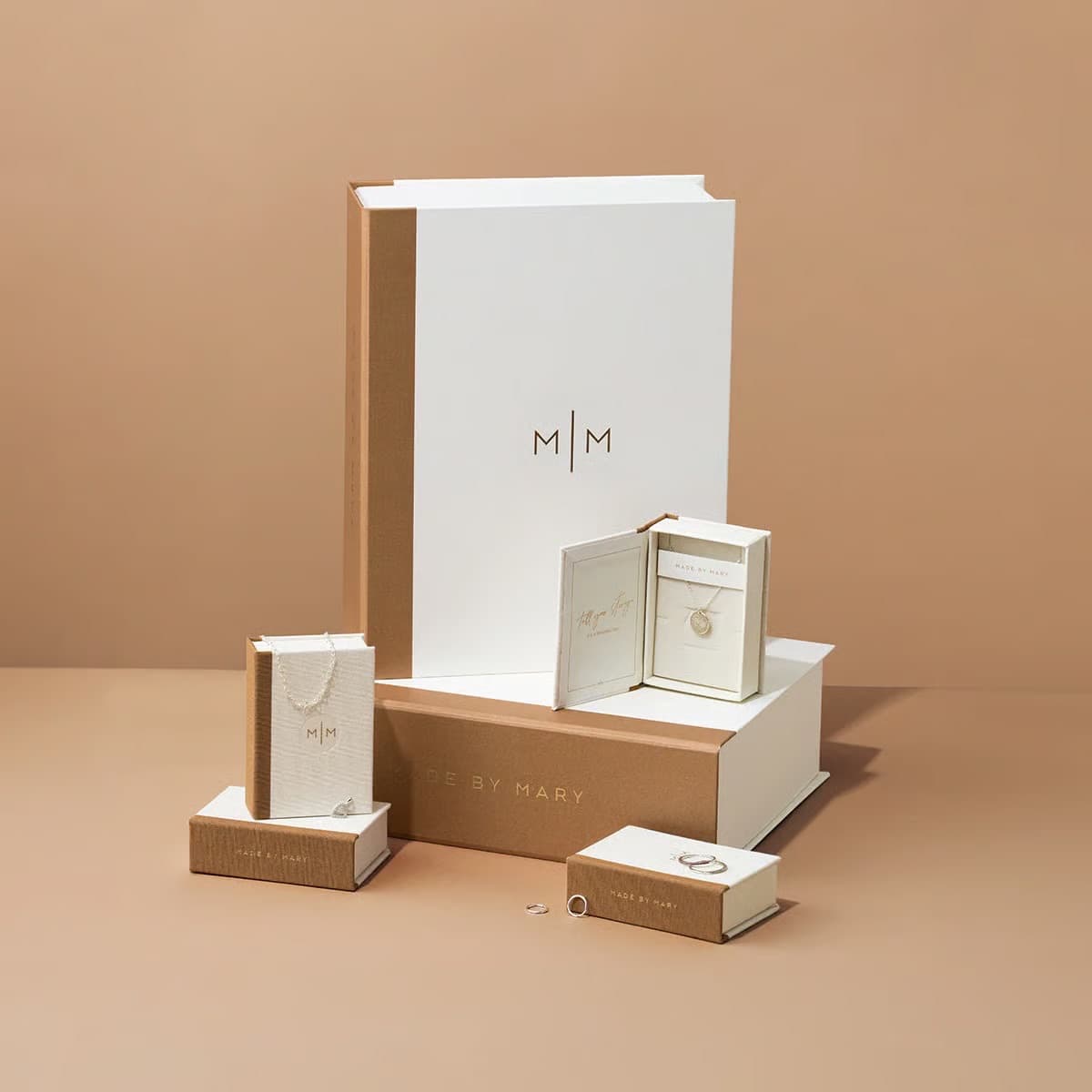
Sustainable jewelry packaging means using specific, verifiable materials and designing the full packaging system for lower waste, easier recycling, or responsible sourcing. For jewelry brands, the practical options are usually FSC-certified paper, recycled paperboard, molded fiber inserts, mono-material paper systems, reusable pouches, and reduced-volume box structures.
Key Takeaways
- Sustainable jewelry packaging works best when the claim is specific: FSC paper, recycled content, mono-material paperboard, or reusable format.
- Rigid jewelry boxes can be made more sustainable, but multi-material construction can make recycling harder.
- Molded fiber works well for trays, inserts, and protective structures when the brand aesthetic supports it.
- SB 54 and EPR laws make packaging documentation more important for brands selling into California and other regulated markets.
- The most sustainable package is often the one that uses less material, ships efficiently, and avoids vague claims.
Related reading: Sustainable Packaging Playbook, PCR Packaging for Beauty Brands, Mono-Material Packaging Design, Material Decision Framework, and Jewelry Packaging.
What Makes Jewelry Packaging Sustainable?
A sustainable jewelry box is not sustainable because it is beige, kraft, or covered in leaf graphics. It needs a material decision, a sourcing claim, or an end-of-life path that can be explained clearly.
The strongest claims are specific: FSC-certified paper, recycled paperboard, post-consumer recycled content, plastic-free construction, mono-material paper design, reusable pouch, or reduced packaging weight. The weakest claims are vague: eco, green, earth-friendly, conscious. Those words do not tell a customer or compliance team anything.
Jewelry brands also have a unique challenge. The category leans premium, and premium often means rigid, lined, wrapped, glued, hinged, and layered. That can create a beautiful unboxing experience, but it can also make recycling harder.
Which Materials Work Best for Sustainable Jewelry Packaging?
FSC-certified paper is one of the most practical options for jewelry boxes, sleeves, cards, and gift packaging. It gives the brand a recognized sourcing claim without forcing the package into an unfamiliar format.
Recycled board can reduce virgin material use, but it has to be tested for color, stiffness, edge quality, and surface finish. Jewelry packaging needs clean edges and strong presentation. A recycled substrate that looks rough may work for some brands and hurt others.
Molded fiber can replace foam or plastic trays in some formats. It works best when the product shape is stable and the brand aesthetic can handle a softer, more organic texture. It is less ideal when the piece needs a velvet-like feel or very fine anti-scratch control.
Mono-material packaging is easier to explain and easier to recycle. A paperboard box with paper insert and paper wrap is cleaner than a rigid box with foam, magnet, plastic window, velvet lining, and laminated wrap.
How Do SB 54 and EPR Rules Affect Jewelry Packaging?
SB 54 in California and broader extended producer responsibility laws are changing the packaging conversation. Jewelry brands may not think of themselves as packaging-heavy companies, but they still sell products in boxes, mailers, pouches, cards, and shipping cartons.
The practical takeaway is documentation. Know the material in each component. Know whether paper is certified. Know whether plastic is recyclable in practice. Know whether the package includes mixed materials that make end-of-life harder.
If a brand sells into California, the packaging strategy should assume more scrutiny over time. Our SB 54 compliance guide covers the full audit framework. That does not mean every jewelry box has to become plain paper. It means claims need backup and formats need to be chosen intentionally.
Can Luxury Jewelry Packaging Be Sustainable?
Yes, but it requires tradeoffs. A luxury box can use FSC paper, recycled board, plastic-free construction, water-based coatings, and a reduced material footprint. But some classic luxury cues—magnets, foam inserts, plastic trays, laminated wraps, and metal hardware—can complicate the sustainability story.
The best approach is to choose the sustainability priority before design starts. Our luxury jewelry packaging guide covers how to maintain premium positioning while making these tradeoffs. If recyclability matters most, use fewer materials. If reusability matters most, design a pouch or box worth keeping. If responsible sourcing matters most, document paper and board certification. Do not try to claim everything at once.
What Does Sustainable Jewelry Packaging Cost?
Sustainable materials are not automatically cheaper. FSC paper may add modest cost depending on supplier and availability. Recycled paperboard can be comparable, but finish quality and supply consistency matter. Molded fiber tooling can add setup cost but reduce plastic or foam in production. Mono-material design can reduce complexity if it is engineered early.
For jewelry packaging, the biggest savings often come from reducing the system: smaller box, lighter insert, fewer mixed materials, less unused space, cleaner freight profile. A thoughtful design can be both more sustainable and more cost-efficient. A rushed material swap rarely is. For a full pricing breakdown by format, see our jewelry packaging cost guide.
How to Avoid Greenwashing in Jewelry Packaging
Avoid claims that cannot be proven. Say FSC-certified paper if it is FSC-certified. Say recycled paperboard if the content is documented. Say reusable if the design is durable enough to be reused. Do not say sustainable unless the package has a specific reason to earn that word.
Also avoid hiding the tradeoff. A rigid box may be FSC-wrapped but still include foam. A pouch may be reusable but made from virgin synthetic material. A molded fiber tray may reduce plastic but change the premium feel. Customers can handle nuance. Compliance teams require it.
The Sustainability Tradeoffs Jewelry Brands Need to Understand
Every sustainable packaging choice has a tradeoff. Recycled board can have color variation. Molded fiber can change the tactile experience. Mono-material design can limit closure options. Reusable packaging can use more material upfront. FSC paper still needs responsible design if the package is oversized.
The right question is not, “What is the most sustainable material?” The right question is, “What sustainability priority matters most for this product and channel?” That priority might be lower weight, certified sourcing, plastic reduction, recyclability, reuse, or reduced overall material.
A clear priority prevents confused packaging. Without it, brands end up with a package that tries to be everything and proves nothing.
Paper-Based Systems
Paper-based jewelry packaging is the easiest sustainability story to explain. It can be FSC-certified, recycled, recyclable, and familiar to consumers. It works well for boxes, sleeves, cards, and some inserts.
The challenge is premium feel. Thin paperboard can feel too light for fine jewelry. Heavy rigid board can feel premium but may include wraps, glues, liners, and magnets that complicate recycling. The design has to balance simplicity with the category’s expectation for presentation.
Reusable Systems
Reusable packaging can be a strong strategy in jewelry because customers already store pieces. Pouches, travel cases, and durable boxes can live beyond the first unboxing.
But reusable only works if the customer actually has a reason to reuse it. A pouch that protects earrings in a suitcase has a use case. A bulky box that takes up drawer space may not. Reuse is behavior, not a claim.
Sustainable Claims That Need Documentation
If the package uses FSC-certified paper, keep documentation. If it uses recycled content, know whether that content is post-consumer or post-industrial. If the package is recyclable, know which components are included in the claim. If it is reusable, explain the use case.
This matters because regulation is moving toward proof. SB 54, EU PPWR, and broader EPR programs are making packaging data more important. Even when a small jewelry brand is not the first target of enforcement, retailers and larger partners may ask for documentation earlier.
The brand should be able to answer a simple question: what is this package made of, and what is the customer supposed to do with it after purchase?
How to Reduce Waste Without Losing Premium Feel
The easiest place to reduce waste is empty space. A smaller box, tighter insert, and lighter shipper can reduce material and freight while still feeling premium. Right-sizing is not a downgrade. It is good packaging engineering.
The next lever is component reduction. Replace foam with paperboard where possible. Remove plastic windows unless they are essential. Avoid mixed-material decorations that add little value. Use one finish with intention instead of multiple decorative layers.
Finally, plan the system across SKUs. If the brand uses the same wrap, lining, and finish across multiple sizes, production becomes cleaner and waste can be easier to manage.
How to Make Sustainable Packaging Still Feel Premium
Sustainable packaging fails when it asks customers to accept worse design in exchange for better intent. Jewelry brands do not have to make that trade. The package can be lower waste and still feel premium if the material, structure, and finish are chosen together.
A paper-based rigid box can feel refined with the right wrap, clean corners, and a precise insert. A molded fiber tray can feel intentional if it is shaped well and paired with a brand that can own the texture. A reusable pouch can feel valuable if it is durable enough to travel with the customer.
The mistake is treating sustainability as an aesthetic. Kraft paper does not automatically mean responsible. A green color palette does not make a package recyclable. The material story needs to be real, and the design still has to hold up.
The Documentation Jewelry Brands Should Keep
Keep a simple packaging file for every component. Material type. Certification if applicable. Recycled content if claimed. Supplier documentation. Finish or coating. Glue or laminate if relevant. Recycling or reuse instructions. Weight and dimensions.
This does not need to be complicated. But it needs to exist. As retailers, regulators, and customers ask more questions, brands with documentation will answer faster. Brands without it will have to reverse-engineer their own packaging under pressure.
Documentation also helps with future redesigns. If the brand knows what each component is made of, it can reduce waste intelligently instead of starting from scratch.
How to Phase in Sustainable Packaging Without Disrupting the Line
Most jewelry brands should not change every package at once. Start with one format: a gift set, a mailer, an insert, a sleeve, or a single high-volume box. Test material performance, customer response, freight behavior, and fulfillment impact before changing the full collection.
A phased approach also keeps claims clean. The brand can say exactly what changed and why: FSC paper on the core box, recycled paperboard in the sleeve, molded fiber replacing foam, or a reusable pouch for travel. Specific changes are easier to communicate than broad sustainability language.
Once the first format works, the brand can apply the same rules to the next format. That is how sustainability becomes a system instead of a one-off marketing project.
One more practical rule: do not separate sustainability from packaging cost. A lower-waste box that ships lighter, stores tighter, and uses fewer components can be better for the planet and better for margin. The work is in designing the system early enough that sustainability is not an emergency substitution.
Sustainable Jewelry Packaging FAQ
Questions to Ask Before You Quote This Project
A jewelry packaging quote should answer more than unit price. Ask the supplier which material will be used, what the MOQ is by size, what tooling is required, how color will be matched across the full collection, how inserts will be approved, what freight method is assumed, and what happens if the production sample fails approval.
Ask for the landed-cost view, not just the factory cost. A box that looks cheaper before freight can be more expensive after dimensional weight, storage, rework, and rush shipping. Jewelry packaging is small, but it is often component-heavy. The more components in the system, the more important the quote discipline becomes.
Also ask who owns the final production checklist. The checklist should include material, color, lining, hardware, logo placement, insert fit, carton labeling, shipping carton specs, and acceptable defect tolerance. If those details are not defined before production, they become arguments after production.
Build Jewelry Packaging That Matches the Product
Jewelry packaging carries more responsibility than most categories. It protects the piece, frames the value, and turns a small object into a complete brand experience. If you’re planning a new jewelry box, retail-ready format, seasonal gift set, or full packaging refresh, start with the structure, material, volume, and channel requirements before chasing finishes.
When you’re ready to pressure-test the direction, book a jewelry packaging consultation. We’ll give you a straight read on format, cost, MOQ, timeline, and what should be solved before the first sample is made.
Author: Jordan Harper is the founder of Logic Pac, a custom packaging development firm helping beauty, wellness, jewelry, and luxury goods brands design packaging that looks premium, protects the product, and works in production.
How to Use This as a Packaging Brief
Turn the article into a brief before you ask for pricing. List the product formats, dimensions, materials, inserts, finishes, order quantities, launch date, sales channel, shipping method, and target landed cost. Then separate what is required from what is optional. Required items protect the product and brand. Optional items are where cost can be adjusted without damaging the experience.
For jewelry brands, the most important brief detail is the full collection map. A supplier needs to know whether this is one ring box or a system across rings, earrings, necklaces, bracelets, pendants, and seasonal kits. Without that map, the first sample can look good and still fail the collection.
Also include approval owners. Jewelry packaging often gets reviewed by founders, brand, product, retail, and operations. If those people review samples one at a time, the project slows down. If they review against the same brief, decisions get cleaner.
Primary Sources
Regulatory and certification sources verified as of .
Ready to Start Your
Project?
Tell us your launch date and we’ll map the packaging timeline backward.