How to build a luxury beauty packaging system.
Premium packaging is not a single bottle or a nicer box. It is a system — primary, secondary, trays, materials, finishes, and the brand moments that connect them. Here is how we approach it on luxury beauty, cosmetics, and fragrance programs built to hold up on shelf, in a thumbnail, and in the customer's hand.
What makes a luxury beauty packaging system work?
A luxury beauty packaging system works when primary, secondary, trays, materials, and finishes are developed together — not sourced as separate line items. The pack has to protect the formula, read premium on shelf and in a thumbnail, survive transit without re-seating the components, and give the customer a deliberate first touch when they open it.
What to know
- Treat the package as a connected system of primary, secondary, and tray — not three separate orders.
- Secondary packaging and trays carry more of the first-impression weight than brands expect.
- Material and finish decisions should match the price position and the formula, not just the mood board.
- Premium is earned through structure, proportion, and execution — not just weight or decoration count.
01.Packaging is a system, not a single box
Most luxury beauty packaging problems trace back to the same root cause: the pack was commissioned in pieces. The bottle was selected first. The carton was briefed later. The tray or insert was added when samples arrived and the components rattled. By the time the brand team saw the full unboxing, each layer had been optimized against a different brief.
The brands we work with on luxury programs make the opposite move. They treat the pack as a single system from the beginning. Primary, secondary, tray, outer shipper, and any seasonal or gifting layers are developed together, with one accountable owner holding the full specification.
Three things change when the system is built that way:
- The components stay in orientation. A properly specified molded tray holds the primary pack in exactly the position it should be in when the customer opens the carton.
- The finishes carry across layers. The foil on the outer carton, the deboss on the inner wrap, and the decoration on the bottle feel like one brand — not three suppliers' interpretations.
- The cost model is honest. Material, decoration, tooling, tray, freight, and warehousing are modeled as one landed-cost number — not as six invoices.
- How to design primary, secondary, and tray as one system
- Where molded trays and inserts actually earn their cost
- Material and finish decisions that match a premium position
- The six brand moments every luxury pack has to carry
- California compliance and claims considerations before you print
- Production readiness — what to inspect before green-lighting a run
- A 10-item on-page readiness checklist you can run against your current project
02.Primary packaging — the product in the customer's hand
The primary pack carries the formula and most of the recurring brand touch. It is the component the customer picks up every morning, puts back on the counter, and photographs when they talk about the product. Three questions decide whether the primary pack is doing its job on a luxury program.
1. Does the silhouette carry the brand?
A luxury primary pack should be identifiable in a thumbnail at small size without the label. The strongest beauty, cosmetics, and fragrance brands either own a proprietary silhouette or dress a stock format with enough intention that it reads as theirs. Both approaches work. The failure mode is a stock bottle treated as a stock bottle.
2. Does the finish match the formula?
Clear glass signals “see the formula.” Opaque aluminum signals “protect the formula.” Frosted glass signals “high performance.” Mirror-finish anodized metal signals “object.” The decision has to match what the formula actually needs and what you want the customer to feel about it. See our Beauty Packaging Material Decision Guide for the full tradeoff map.
3. Does the primary stand up to its own category?
A $120 serum sitting next to prestige competitors should not look like a stock pharmacy bottle. A $38 nail product sitting next to indie launches should not look like a drugstore polish. The primary pack has to earn its space in the category it is competing in — which means auditing it against a real competitive set, not an internal mood board.
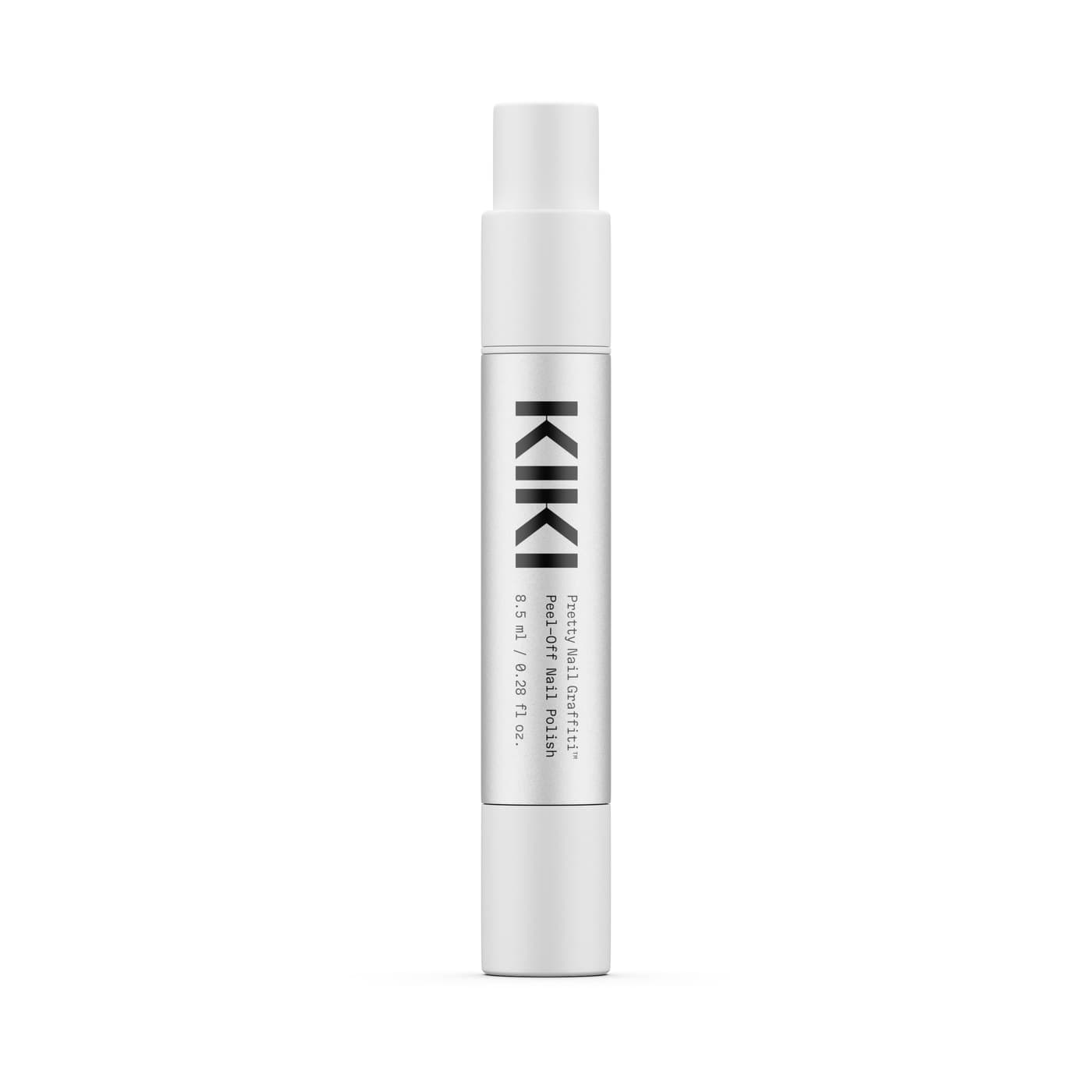
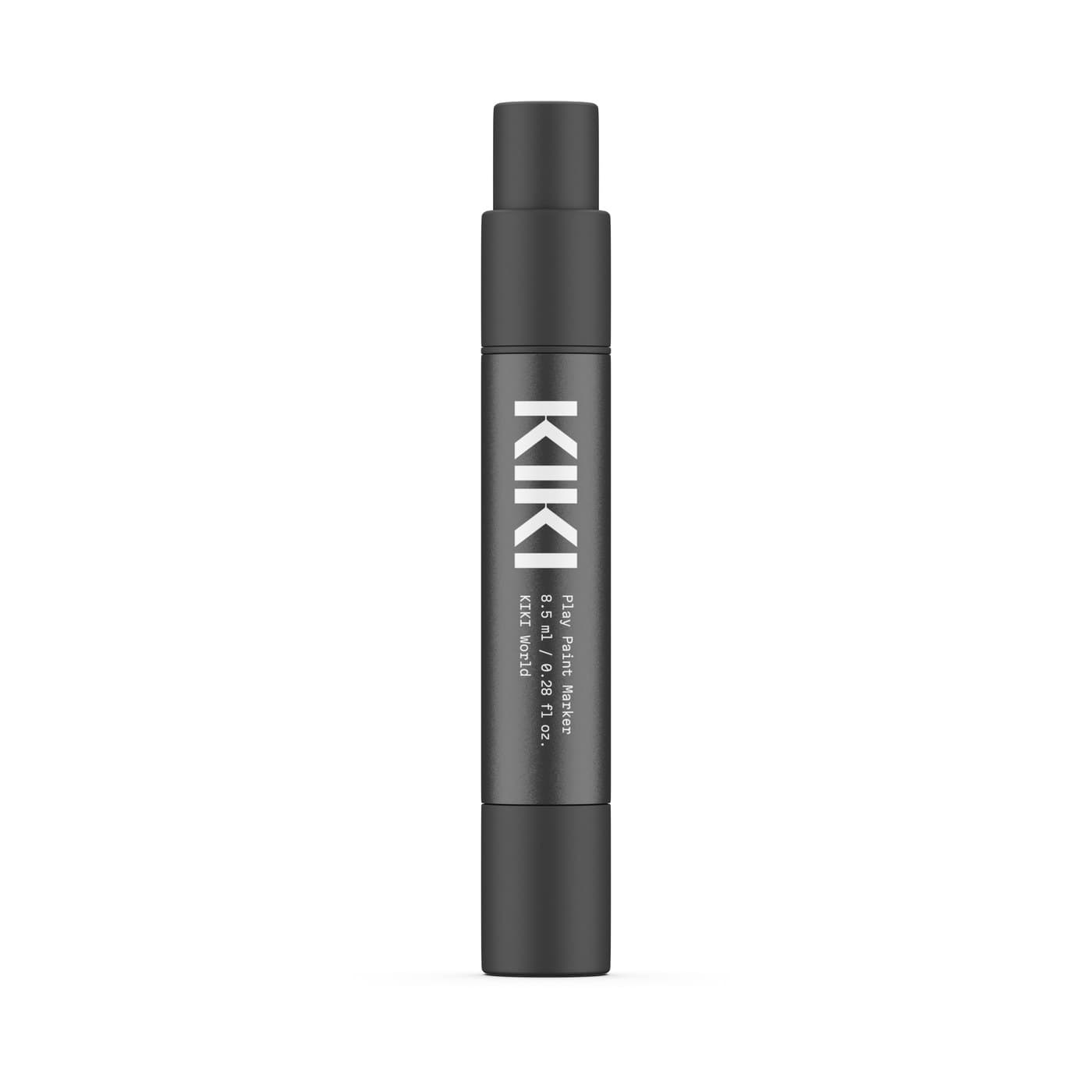
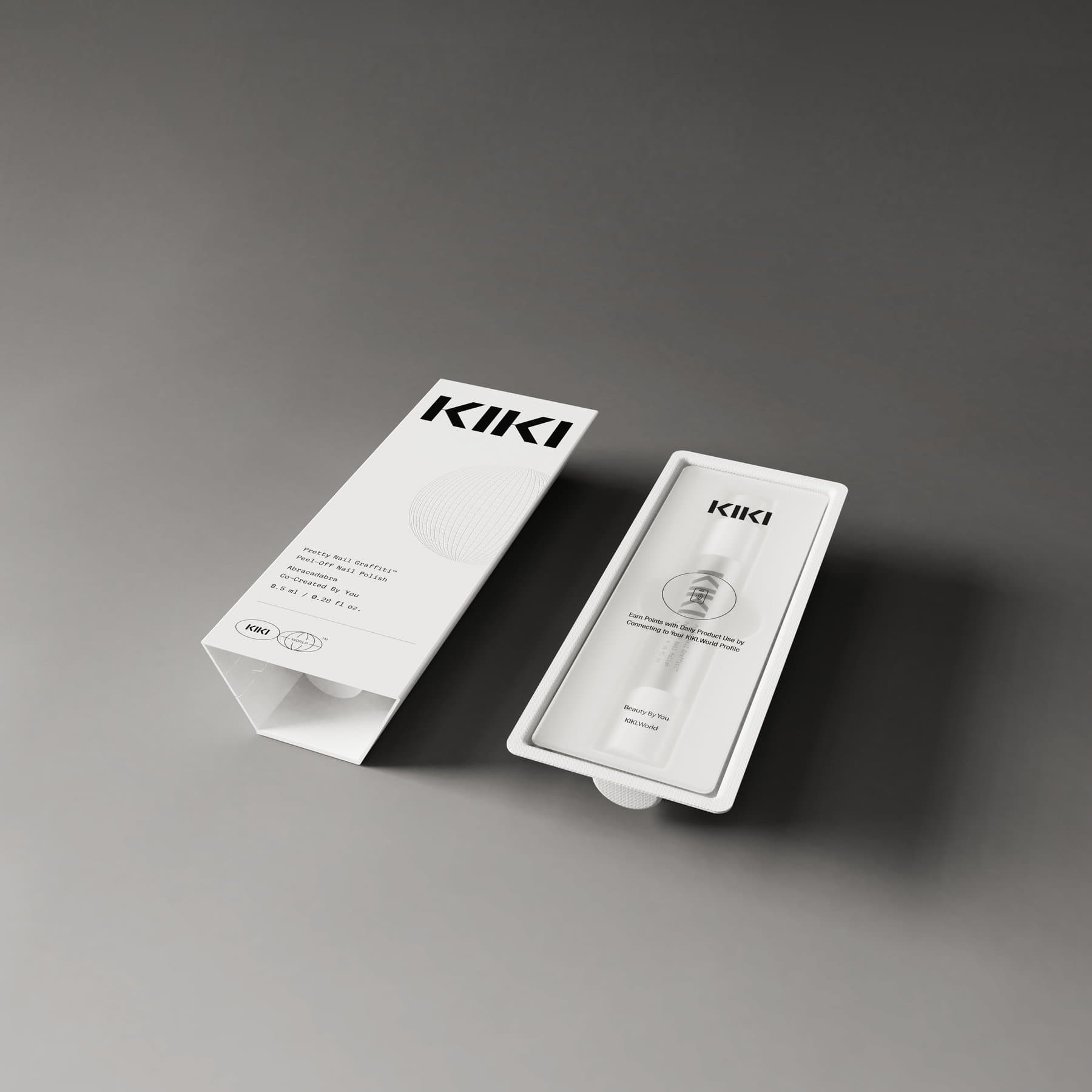
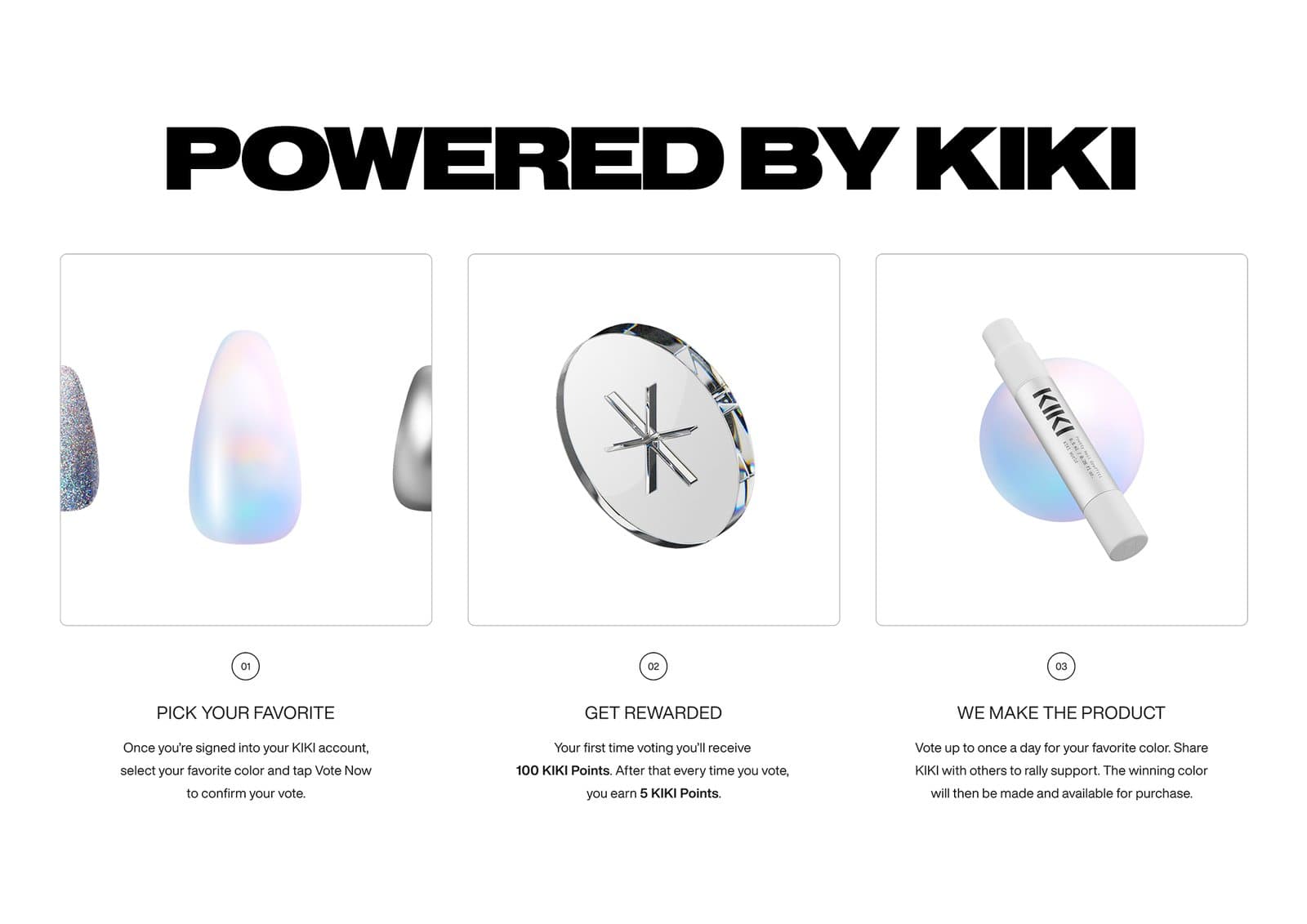
Primary packaging across the KIKI World Pretty Nail Graffiti and Play Paint SKUs. The silhouette is the brand asset; color and label carry the product differentiation. Logic Pac developed the primary and secondary packaging system for KIKI World.
03.Secondary packaging — the first touch, the shelf moment, and the unbox
Secondary packaging gets treated as a wrapper far more often than it should. On a luxury beauty program, the carton or presentation box carries three jobs at once:
- Shelf. The carton is what the retailer sees in the planogram and the customer sees on the shelf. The primary pack is often not visible until after purchase.
- Thumbnail. In e-commerce product photography, the carton is frequently the hero image — the shape that reads first in a product grid.
- First touch. When the customer opens the shipper or picks up the gift, the carton is the first object they interact with. The weight, finish, and open ratio set the tone before they see the primary pack.
Luxury carton work is not just “a nicer box.” It is a structural decision: rigid vs. folding, open ratio, lid style, interior finish, closure, and the way the carton reveals the component underneath. On the KIKI World secondary packaging program, that reveal was the campaign.
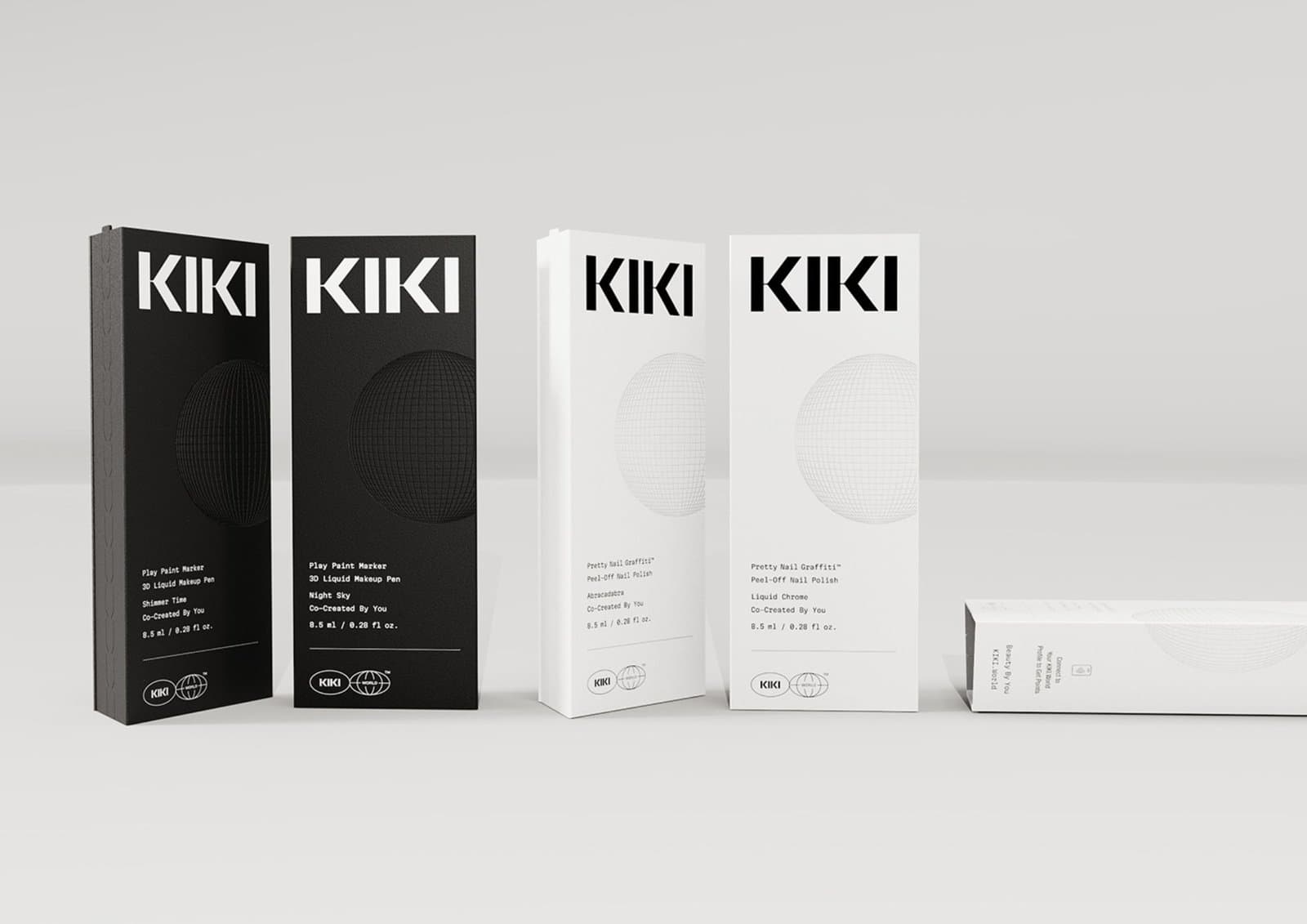
The KIKI Pretty Nail Graffiti Launch secondary packaging program was named a Pentawards 2024 shortlist entry. Logic Pac developed the structural packaging system.
04.Trays, inserts, and the fit problem no one wants to solve
The molded tray or insert is where luxury packaging most often falls apart. The outer looks right. The primary is right. The tray is sourced late, specified loosely, and arrives slightly off — the component shifts in transit, the orientation on open is wrong, the fit feels generic.
On a luxury program, the tray is a product. It has to:
- Hold every component in a consistent orientation when the customer opens the lid.
- Dampen vibration and movement during transit without introducing scuffing on the primary pack's decoration.
- Fit the entire SKU family — not just one hero size — if the product is part of a system.
- Match the brand's material intent. Molded paper pulp signals “considered.” Thermoformed PET signals “mass.” EVA foam signals “tech.” Flocked thermoform signals “legacy luxury.”
Molded paper pulp has become the default for premium beauty when the brand wants a sustainability signal without surrendering the fit. The tooling is slower than thermoform — typical production tooling for molded fiber runs 8 to 12 weeks — but the finished part reads as considered rather than disposable.
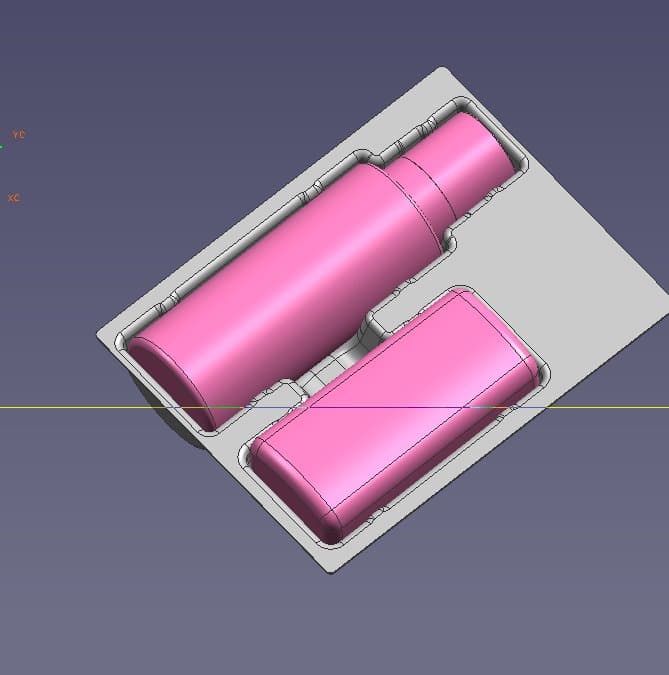
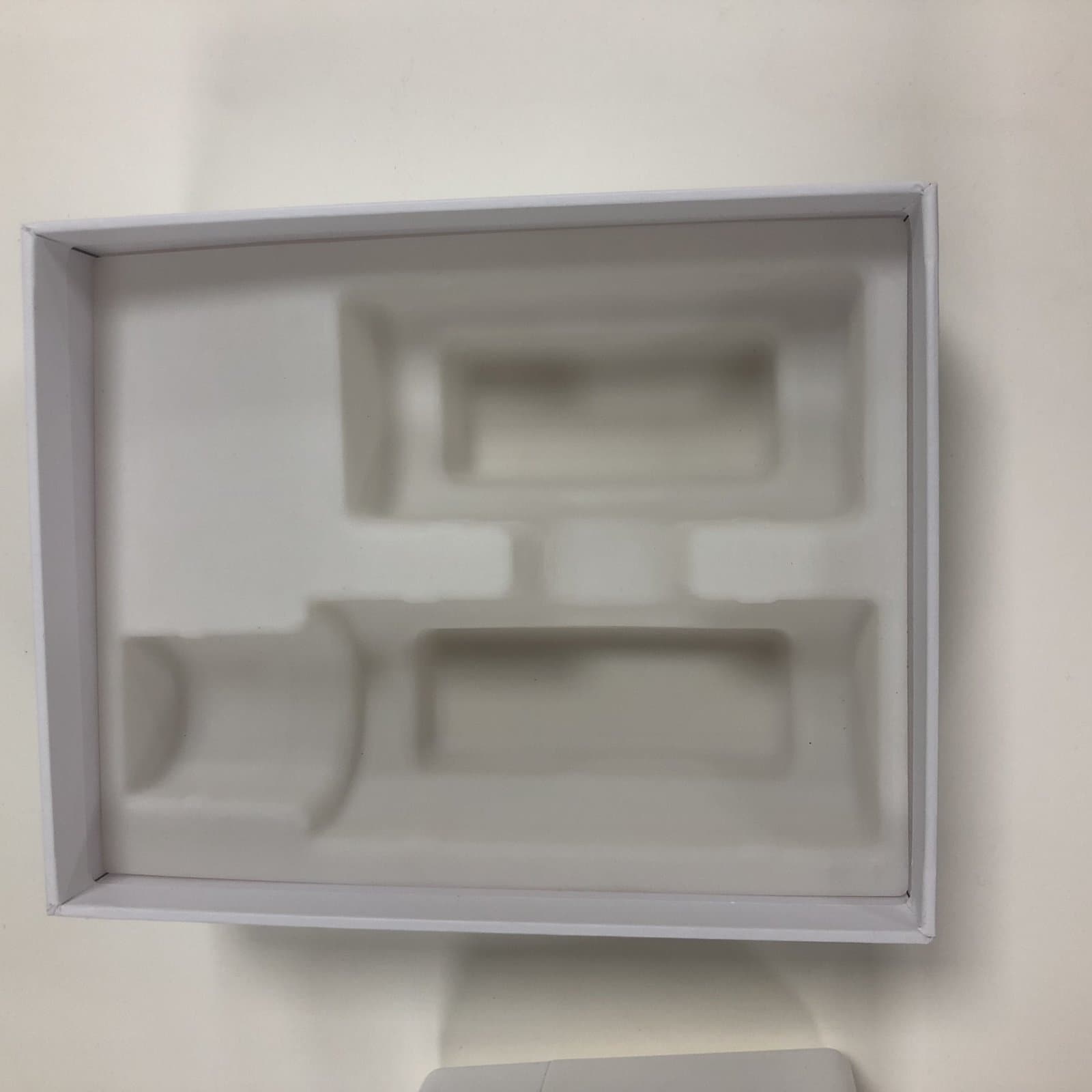
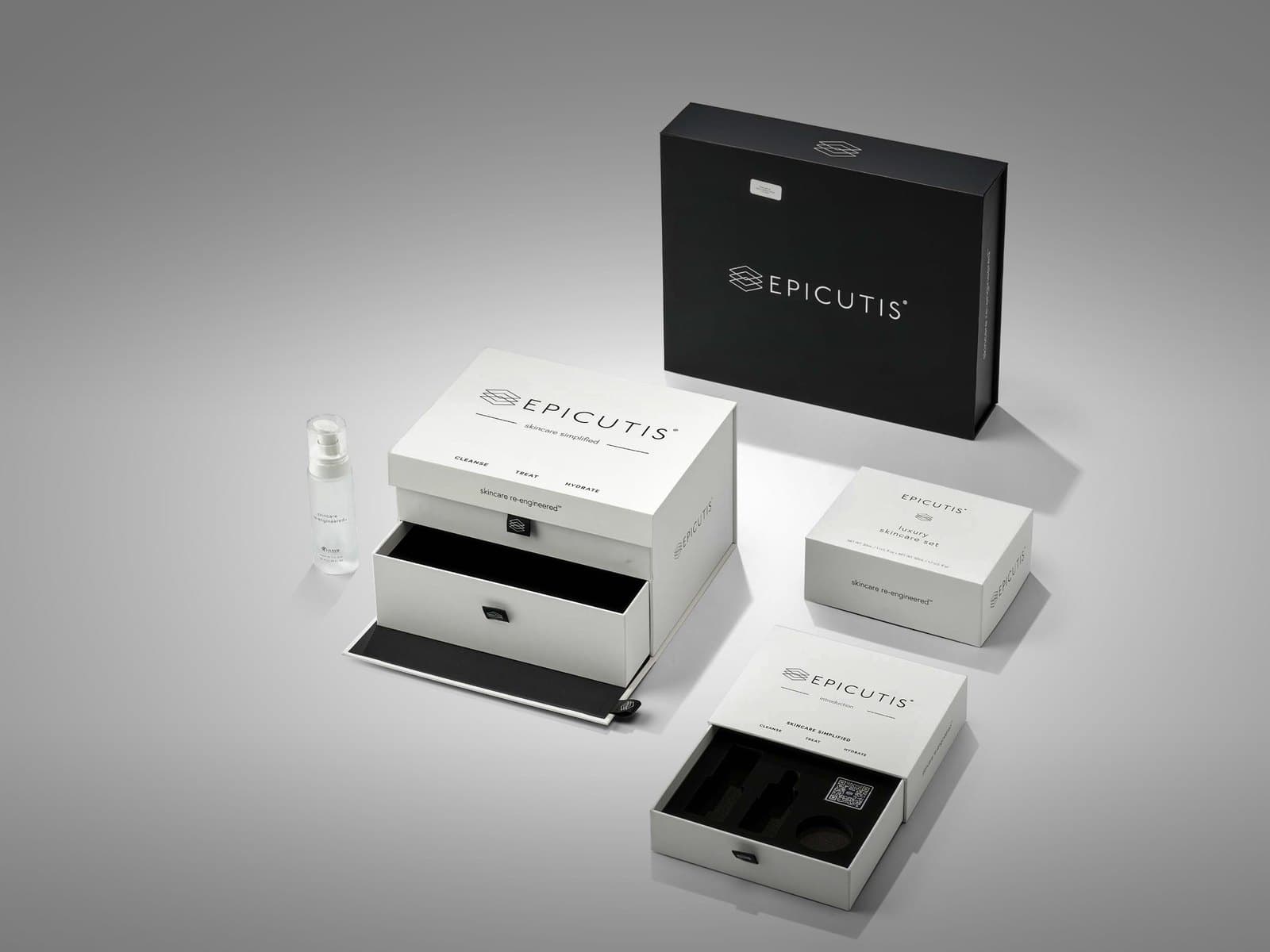
Molded pulp tray development on an Epicutis skincare system. Each cavity is tolerance-specified to the primary pack it holds. Logic Pac developed the structural tray and secondary packaging program for Epicutis.
05.Materials and finishes that earn their cost
Material is the single strongest non-verbal brand signal in beauty. Most customers cannot name the material by category, but they read it instantly through weight, finish, and tactile feedback. Finish decisions — soft touch, foil, spot UV, emboss, deboss — are the second layer of that signal.
On luxury beauty programs, the rule we use is simple:
Bottom line
Material carries the brand position. Finish carries the brand moments. Decoration is restrained to one or two intentional faces per layer. If everything is a hero finish, nothing is.
In practice this means:
- Glass for prestige skincare, serums, and fragrance where weight and clarity support the position.
- Aluminum for refillable bases, deodorant, prestige skincare, and cases where the object itself becomes a brand asset.
- Paper pulp or molded fiber trays for the sustainability-forward inside story.
- Rigid board, cold-foil-friendly folding carton, or soft-touch-coated board for secondary — chosen for the specific face treatment, not generically.
- One or two restrained finishes per surface. Soft touch plus spot UV. Foil plus deboss. Not all of them.
For the deeper material comparison, see the Material Decision Framework. For finishes, see the Packaging Finish Guide.
06.The six brand moments every luxury pack has to carry
A luxury beauty package is encountered six distinct ways. Most packaging programs are optimized for only one or two of them. The programs we work on target all six.
| Moment | What the customer sees | What the pack has to do |
|---|---|---|
| Shelf | Carton face in a retail planogram at arm's length | Read the brand and the category at distance; signal the price tier. |
| Thumbnail | Product photography in a 1:1 e-commerce grid | Keep the silhouette legible at small size; carry color and finish cues through compression. |
| Hand | Weight, surface, and closure at first pickup | Match the price position; reward the touch; avoid any element that feels loose or thin. |
| Open | The carton reveal and the primary pack in orientation | Present the component the way the brand intended; use the tray to hold it there. |
| Use | The primary pack over its full use cycle | Protect the formula; reward the daily ritual; last the full product life without visible wear. |
| Share | Social, gifting, and photography after purchase | Photograph well; hold up as a backdrop; keep its finish when customers handle it. |
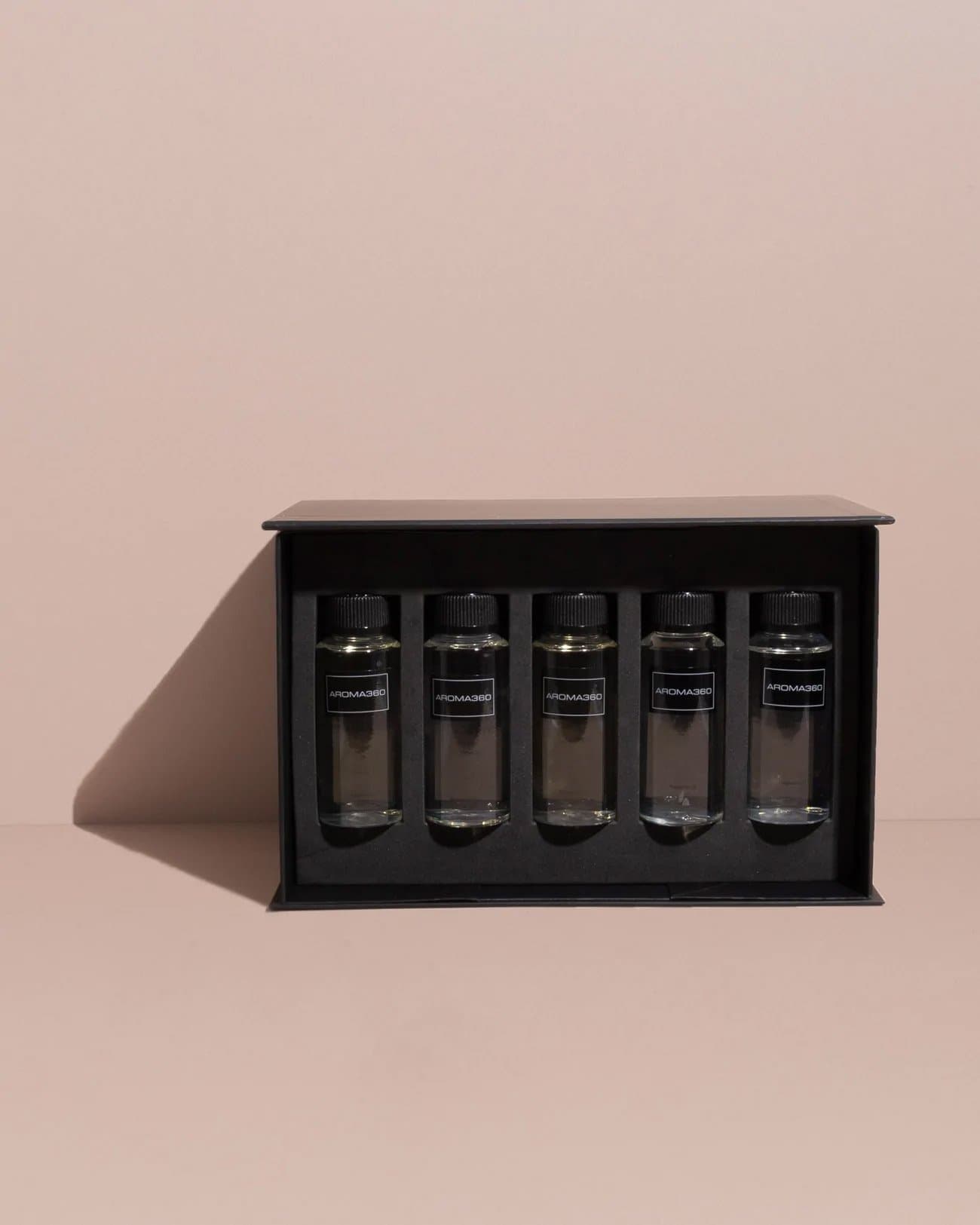
Aroma360 fragrance discovery-set architecture: secondary packaging designed to organize, present, and ship a multi-SKU luxury program. Logic Pac developed the structural packaging system.
07.California compliance and claims — what Logic Pac reviews before you print
Luxury positioning does not exempt packaging from California's compliance regime, and in some ways it concentrates the exposure. Three areas matter most for beauty brands building a US-first launch, and Logic Pac reviews all three as part of a luxury packaging program.
California SB 54 — recyclability review
SB 54 requires that single-use packaging sold in California meet recycling or reduction targets over the next decade. The practical implication for beauty brands is that mono-material, recyclable packaging and recycled content become increasingly expected; multi-material cartons, mixed-resin pumps, and non-recyclable laminates become increasingly expensive to defend. Logic Pac offers an SB 54 recyclability review on luxury packaging programs — evaluating each component against California's expected classification before tooling or print. For the deeper playbook, see our Sustainable Beauty Packaging & SB 54 article.
FTC Green Guides — claims review
Any sustainability language on the pack or in copy — “recyclable,” “recycled,” “compostable,” “eco,” “sustainable” — needs substantiation under the FTC Green Guides. The pack can carry the claim only if the claim is accurate for the format, the local recovery infrastructure, and the specific component. Logic Pac offers an FTC Green Guides claims review on packaging copy before copy ships to print, flagging claims that will not survive scrutiny and recommending language that will.
Proposition 65 — substrate and ink screening
Any product sold in California has Prop 65 exposure for listed substances. The warning language itself is well understood; the trap is substrate and ink choices that trigger it unexpectedly. Logic Pac offers a Prop 65 substrate and ink screening as part of pack specification review, with the goal of identifying problem combinations before plates are cut rather than after.
08.Production readiness — what to inspect before you green-light
Luxury beauty packaging is unforgiving at production. A finish that drifts between proofs and press, a tray cavity that shifts a millimeter, a carton panel that bows under weight — these are the issues that quietly turn a premium project into a reprint. For a representative luxury beauty packaging program — brief in to launch out — a realistic end-to-end timeline is 16 to 24 weeks, depending on tooling scope, SKU count, and finish complexity. The sections below are the three categories of checkpoints that prevent most late-stage surprises.
Pre-production proofing
- Color proofs on the exact substrate and finish being used in production. Not a digital proof. Not a different stock.
- A dry-run of foil, spot UV, deboss, and emboss in registration — especially where decorations stack.
- A written specification of color standards, finish tolerances, and acceptable variance.
- Primary-pack sampling cycle: on luxury programs we run, primary-pack samples typically move through fewer than four sample rounds over a 2 to 4 week window before green-light — tight enough to protect the launch date, long enough to catch finish and tolerance issues on the right substrate.
Component fit testing
- Primary pack dropped into the production tray, in production carton, at the production component weight. The pack should seat in one motion.
- Tolerance tested across the SKU family. If the tray is intended to carry multiple components, every component is checked in every cavity.
- Transit tested with the final carton configuration. Shake, drop, and in-case orientation are evaluated.
Pilot run and inspection
- A pilot run before full production, with 100% inspection on finish, color, structural integrity, and component fit.
- Documented acceptance criteria — the production floor should be able to point at a written spec, not a verbal expectation.
- On-site presence at critical quality moments. For higher-stakes launches, Logic Pac has sent team members to the factory and to the client's packout facility to manage transitions in person. The approach is detailed in our Audio Enhancement factory transition case study.
Fulfillment and replenishment
A luxury program does not end at the pallet. Logic Pac operates packaging fulfillment and managed-inventory programs out of Salt Lake City, holding stock, kitting components, and shipping to the brand's 3PL or packout partner on a cadence the brand sets. The result is a replenishment lead time measured in days rather than months, which matters when a hero SKU takes off faster than the next ocean container will land. The Epicutis skincare program is a representative example of this model at scale.
09.The 10-item luxury packaging readiness checklist
Run your current project through the ten checks below. If more than two or three come back with hesitation, the project is not ready to move to tooling or print.
Sources & references
External regulatory and industry references used in this guide. Visual case material is used with permission; details about program outcomes, metrics, and operating specifics are deliberately held until approved for public reference.
- California SB 54 (Plastic Pollution Prevention and Packaging Producer Responsibility Act) — CalRecycle. Governs single-use packaging recyclability, source reduction, and producer responsibility for products sold in California.
- FTC Green Guides — U.S. Federal Trade Commission guidance on environmental marketing claims. Applies to any “recyclable,” “recycled content,” or “sustainable” language on beauty packaging.
- Pentawards 2024 Shortlist — KIKI Pretty Nail Graffiti Launch, developed in partnership with Logic Pac.
Bottom line
Luxury beauty packaging is a system decision. If primary, secondary, tray, material, and finish are developed as one program — with the brand moments explicitly in scope — the pack will carry the position it is supposed to carry. If any of those layers is sourced in isolation, the system falls apart in the places customers notice most. The programs that treat the pack as a system also hold up on the next release: roughly 75–80% of our luxury beauty clients extend into a second SKU family within 12 months of launch, which is the clearest proof we have that the system did what it was supposed to do. For the design-system discipline that makes those extensions possible without rebuilding the brand each launch, see our beauty brand packaging design system guide.Methodology: the 75–80% program-extension figure is a Logic Pac & Logic Agency internal benchmark across luxury beauty programs run 2020–2026.
Still Have Questions?
The questions beauty, cosmetics, and fragrance brands ask us most often about luxury packaging development. If you do not see yours, book a packaging audit and we will give you a straight read.
Luxury Packaging FAQs
Pressure-Test Your Packaging System
Before Tooling.
Share the formula, the price position, the channel mix, and the current pack direction. We will tell you where the system is likely to hold up, where it will not, and what to resolve before you commit to tooling or print.