Retail-ready beauty packaging.
Approved samples don't get you a clean first shipment. What stands between a signed PO and a cased pallet at the retailer's DC is a specific operational discipline most brand teams only learn the hard way — after the first chargeback hits. This is the reference manual for GS1 barcodes, master-carton math, retailer vendor-manual requirements, planogram realities, and the launch-window math that keeps the first shipment clean.
What does retail-ready beauty packaging actually require?
Retail-ready beauty packaging is primary and secondary pack plus every operational layer around it: licensed GS1 barcodes placed and sized to the retailer’s vendor-manual spec, master cartons configured to the retailer’s receiving system, floor-ready presentation that holds the approved planogram facing count, UCC-128 shipping labels, EDI or portal setup, and transit testing calibrated to the actual freight lane. The brands that ship clean first POs do the operational work in parallel with the buyer conversation — not after it.
What to know
- A GS1-licensed, scan-grade-tested barcode is the single most common failure point.
- Master-carton math drives door-count flexibility — lock case pack early.
- Vendor manuals change every year — read the current version by name.
- Chargebacks are predictable: understand categories before the first PO, not after.
01.Retail readiness is an operations discipline, not a design decision
The design-and-production side of a beauty packaging program ends when the production run passes QC and lands in a warehouse. Retail readiness is the layer on top of that — the operational discipline that gets the pack from a cased pallet into a buyer’s DC without a deduction, into a store without a reset problem, and onto a planogram without field adjustment.
Most beauty brands discover this layer the week before their first retail shipment. The pack looks great, QC is clean, the buyer is happy, and then the first chargeback hits because the barcode graded below spec, the master carton weight was logged wrong, or the UCC-128 label was missing. None of those are packaging-design failures. They are retail-operations failures — and the brands that avoid them treat retail-readiness as a parallel workstream to the design program, not a reaction to the PO.
- GS1 licensing, barcode generation, and scan-grade testing — the single most common failure point
- Master-carton configuration math — case pack, dim weight, inner-pack count, and pallet TI/HI
- Sephora, Ulta, and Target retailer-specific operational specifics (vendor manuals, routing guides, VAS)
- Planogram realities — facing count usually drives pack dimension, not the other way around
- The chargeback categories you will see on a first shipment and how to prevent them
- Launch-window math — reset calendars, PO cut-offs, DC appointment windows, late-ship exposure
- DTC-vs-retail SKU architecture and cost tradeoff
- A 10-item retail-readiness scorecard you can run before the first production order

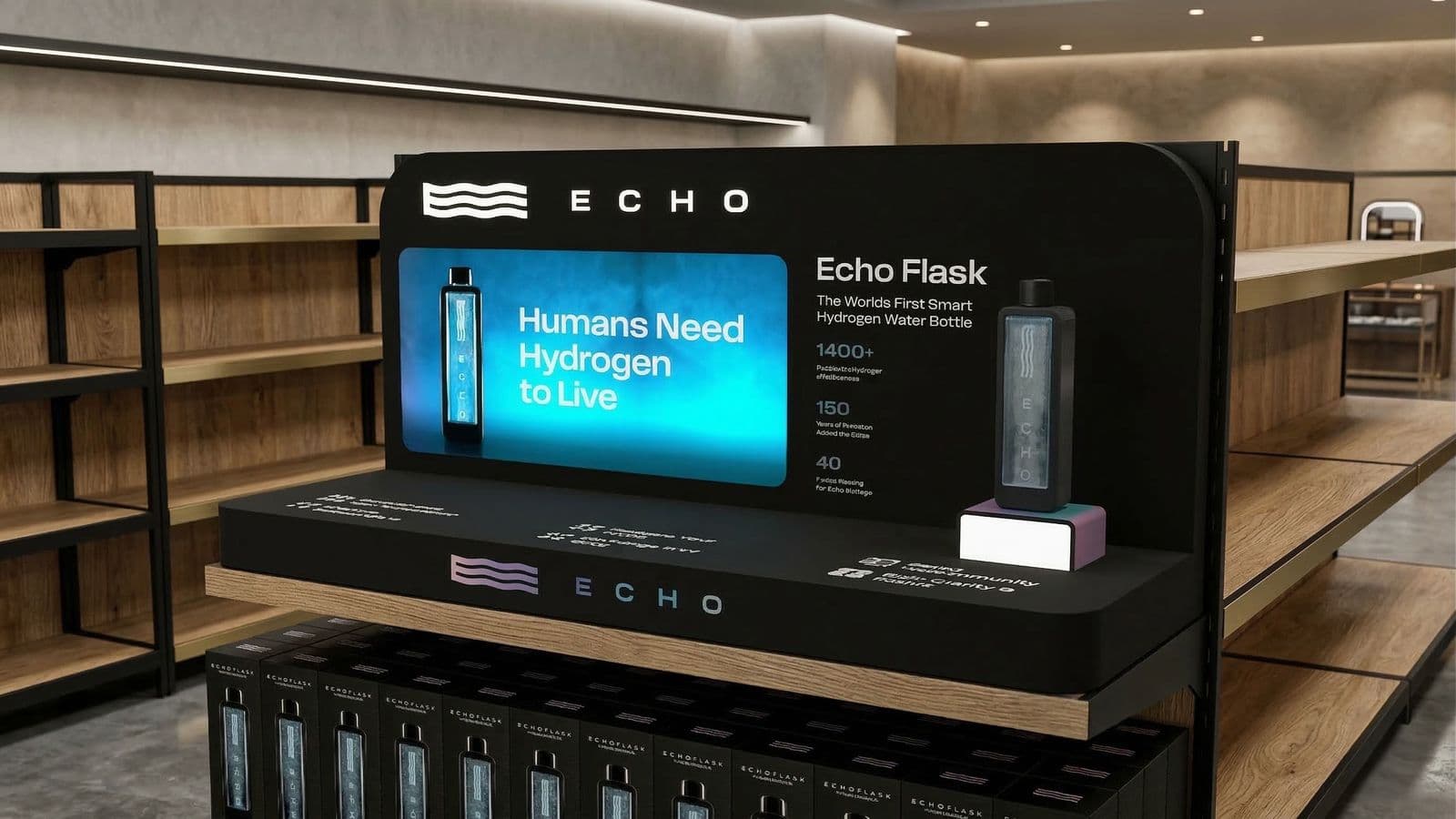
Retail readiness lives in the operational layer around the pack — compliance labels, display units, case packs, and planogram-fit decisions that get made before the first PO lands.
02.GS1, UPC & barcode readiness
Barcodes are the first thing a retailer scans and the first thing that gets rejected if it fails. This section is non-negotiable for every retail channel.
Licensed GS1 prefix — the only kind that works
Every UPC-A (12-digit, North American) or EAN-13 (13-digit, international) barcode is derived from a licensed GS1 company prefix. The prefix is leased from GS1 US (or the regional GS1 affiliate), not generated from a free online tool. Retailer barcode-verification systems check whether the GS1 database recognizes your prefix — unlicensed codes fail that check and the PO is held.
GS1 US licensing is tiered by number of SKUs. A 100-SKU license runs under $2,000/year including the first-year capacity fee. Larger prefixes scale from there. Budget for the license as a fixed infrastructure cost, not a per-launch expense.
Grade C or better, verified on the production substrate
A barcode is only as readable as the substrate it prints on. Soft-touch laminates, metallic foils, textured papers, and dark backgrounds all affect scan grade. The standard requirement is ANSI/ISO Grade C or better on the production substrate — verified with a barcode verifier (not a smartphone), not on a proof. Grade D or lower routinely fails at the DC scanner and triggers a receiving chargeback.
Placement, orientation, size, and quiet zone
Retailer vendor manuals specify where the barcode goes on each pack format, which orientation, what size (nominal 100%), and how much quiet zone is required on each side. Common mistakes:
- Placing the barcode too close to a seam, panel edge, or decoration — fails the quiet-zone requirement.
- Printing the barcode on a reverse color scheme (white bars on dark background) without verifying scan contrast ratio.
- Shrinking the barcode below 80% nominal to fit a small pack face — scan reliability drops sharply below that threshold.
- Reusing the same UPC on a limited-edition variant — every unique sellable SKU needs its own code.
Logic Pac approach. On retail-ready programs we generate the GS1 code, specify placement and quiet zone against the current vendor manual, print on the exact production substrate, and verify grade with a Honeywell or Microscan verifier before the first case ships. The barcode section of our Packaging Testing & QC guide covers the measurement protocol in more depth.
03.Master cartons & case packs
The case pack is a quiet decision early in development that becomes a loud problem at retail launch. Case pack drives: master-carton dimensions, master-carton weight, pallet math, door-count flexibility, DC labor time, and whether a first PO lands on round pallets or spills into partials.
Case pack — pick a number that fits downstream math
The ideal case pack divides into the retailer’s typical first-PO door count without leaving partials. Common beauty case packs:
- 6 or 12 per inner, 24 or 36 per master — common for prestige skincare and color cosmetics in rigid or folding cartons.
- 4 per inner, 12 or 24 per master — common for fragrance, luxury hero SKUs, and heavier formats.
- 1 per inner, 6 or 12 per master — common for gift sets, PR kits, and holiday programs.
Case pack also drives master-carton dimensions. Lock the case pack with the retailer’s receiving team before tooling the master carton — changing it later usually means recutting dies for the inner and outer carton both.
Pallet TI/HI — how cartons stack
TI (tier count) is how many cartons sit on one layer of a pallet. HI (height count) is how many layers stack. TI × HI × case pack = units per pallet. Retailer DC systems are optimized for standard GMA pallet math (48” × 40”, 48” or 50” tall). Odd carton dimensions that produce 7-tier or 9-tier pallets routinely get flagged.
Dim weight — the hidden freight tax
Parcel and LTL carriers bill by dimensional weight when a carton is bulky but light (common for beauty gift sets, PR kits, and foam-dense SKUs). Dim-weight exposure can double the per-carton freight cost. On programs with significant parcel freight, re-engineer the master carton to compress dim weight before locking the spec.
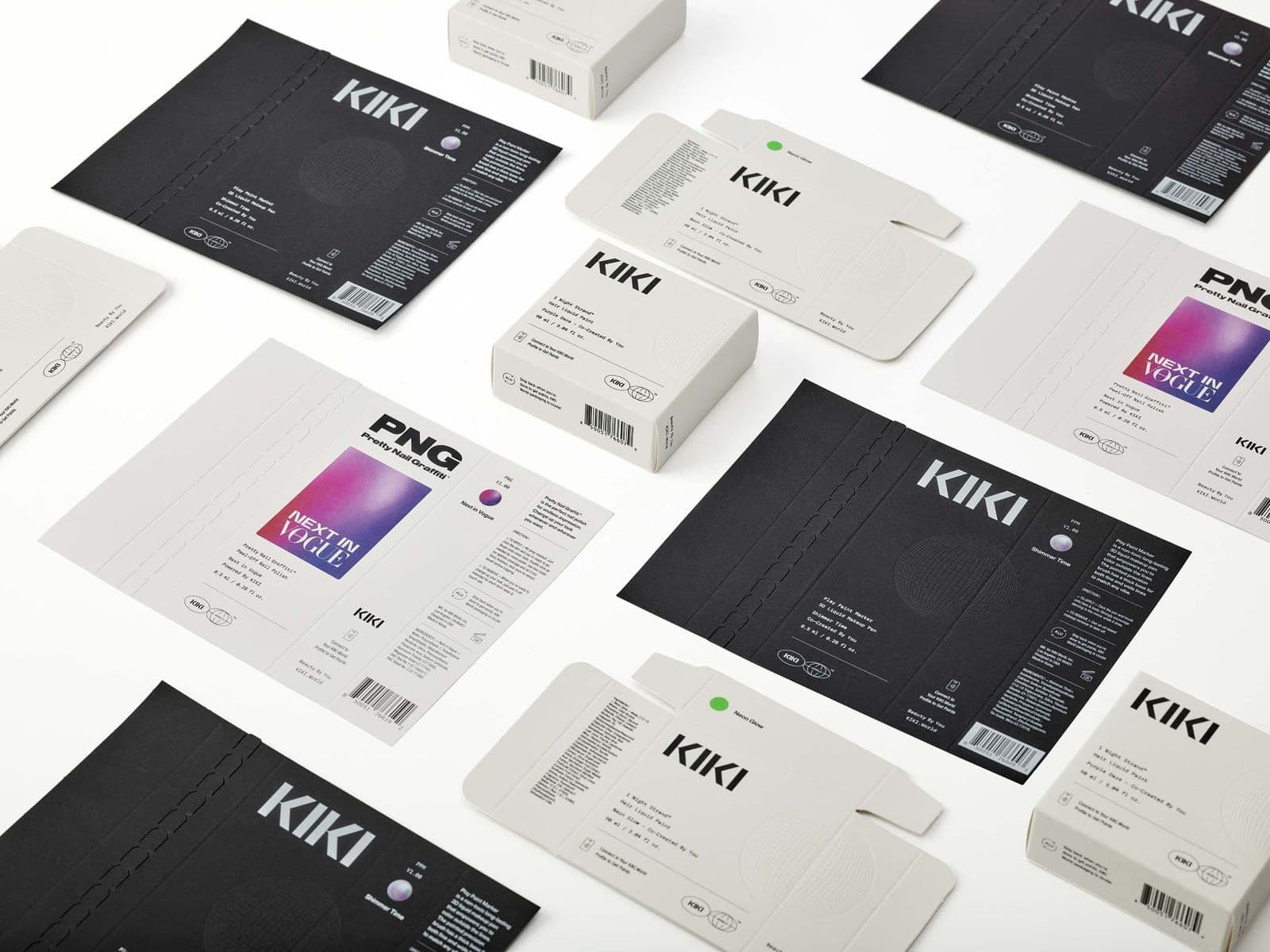

The barcode panel, nutritional/content panel, and compliance text are specified at carton-flat stage, long before the pack goes to the retailer’s receiving team.
04.Sephora, Ulta & Target — what each retailer actually asks for
Every beauty retailer has a vendor manual. Those manuals change — sometimes materially — year over year. Use the current version. Reading the previous year’s manual and assuming nothing moved is one of the top three sources of first-shipment chargebacks.
Sephora
Sephora operates on an inbound compliance program that covers barcode grade, carton labeling, routing, and VAS (value-added services like security sensors or hangtags) by category. ASNs via EDI 856 are expected for most national programs. Smaller specialty vendors sometimes onboard via the vendor portal. Sephora runs a strict receiving window at its DC — missed appointments carry fees. Floor-ready expectations include UPC face-up, no field assembly required, and category-specific sensor policy.
Ulta
Ulta Beauty’s vendor requirements include GS1 UCC-128 shipping labels, routing-guide carrier selection, and a specific inner-pack convention for several categories. Ulta is strict on carton weight accuracy — cartons weighed outside the ASN-declared weight range are flagged. Expect vendor-manual review to catch label-placement requirements that differ from Sephora.
Target
Target’s Partners Online portal manages PO, ASN, invoice, and compliance scoring. Target requires EDI for most new-vendor programs, uses a vendor scorecard that tracks on-time ship, order fill rate, and compliance labeling, and runs a strict routing guide. First-shipment chargebacks on Target programs commonly come from: ASN discrepancies, missing or mis-formatted UCC-128, pallet build errors, and late DC appointments. Target’s beauty category runs a specific set of planogram cycles — missing the reset window means waiting for the next cycle.
What this means for first-time retail vendors. The vendor-manual review for a single retailer typically runs 20–40 pages per category. Reading it once is not enough — a line-by-line review against your current pack, logged by requirement, is the step that catches the gaps. Logic Pac routinely runs this review on new retail launches and tracks the gap-close list through to production.
05.Planograms & shelf facings
Buyers approve a facing count on the planogram before they issue a PO. That facing count drives pack dimensions in one direction: the pack has to fit the facing — the facing almost never flexes to fit the pack. Brands that design the pack first and discover the planogram constraint second end up re-tooling the primary pack or losing shelf position.
The practical workflow:
- Confirm the buyer’s target facing count and shelf height during the pre-PO conversation.
- Measure the actual shelf and planogram footprint at a comparable door (not a trade-show mockup).
- Spec the pack to the facing — width, depth, and height — with a 2–5% tolerance for shrink/registration drift.
- Model the master carton to produce the facing count per inner-pack efficiently (if the buyer wants 4 facings, inner packs of 4 or 8 are often ideal).
For deeper design-system treatment of how a pack holds up on a shelf, in a thumbnail, and in a lifestyle crop, see our Luxury Beauty Packaging System guide.


Holiday and gift-set programs carry additional planogram and set-date discipline — reset windows, co-op display spend, and category-manager approvals that sit outside the standard replenishment calendar.
06.Chargebacks & how to avoid them
A chargeback is a deduction against your invoice when a shipment misses a vendor-manual requirement. Chargebacks are not optional, not negotiable in bulk, and generally non-reversible for the first offense. They are, however, highly predictable — and most of them come from the same ten or so categories regardless of retailer.
The chargeback categories you will see on a first shipment
- Barcode scan failure — code graded below spec, missing quiet zone, wrong placement, or the item/case GTIN mismatch between ASN and physical label.
- Carton labeling miss — UCC-128 missing, mis-formatted, or placed outside the required area.
- Weight or dimension discrepancy — declared carton weight on the ASN differs from the weight at receiving.
- Pallet build errors — TI/HI off spec, mixed SKU pallets when single-SKU required, overhang beyond tolerance.
- Late DC appointment — the carrier missed the booking window or the appointment was not booked.
- Routing-guide violation — wrong carrier, wrong lane, prepaid vs collect misdeclared.
- Floor-ready miss — missing hangtags, sensors, or field-assembly required at the store.
- Expiration / lot-code miss — required lot or batch code missing from the carton or unit for category requirements.
- Over-ship or under-ship beyond tolerance — fill rate outside the retailer’s allowed window.
How to prevent them — the four-week pre-launch checklist
- Four weeks out: complete vendor-manual review line by line; confirm EDI connectivity with a test 850/856/810 cycle.
- Three weeks out: verify barcode grade on production substrate; confirm master-carton weight and dimension against spec with a calibrated scale; confirm pallet TI/HI with a trial build.
- Two weeks out: run a mock DC appointment with the carrier; confirm all UCC-128 and item-level labels print correctly; confirm floor-ready specs (sensors, hangtags, inserts) are installed.
- One week out: ship a one-case pilot to the DC if the retailer allows (some do, some don’t); walk the shipment through QC against the vendor manual one more time before the pallet moves.
What the program buys. On retail-ready programs where Logic Pac manages the full pre-production and shipment cycle, first-shipment chargebacks typically land in the single-digit-percent range of shipments — versus the double-digit range common on first retail launches run without an operations partner. The reduction compounds across subsequent POs as supplier documentation stabilizes.
07.Launch windows & PO cutoffs
Retailers run reset calendars. A set date in a planogram cycle is immovable — if the pack misses the set date, it waits for the next cycle. For most beauty categories at national retailers, that is a 90–180 day miss.
The practical math for a first retail launch:
- Set date works back to PO ship-by date (typically 2–4 weeks before set).
- PO ship-by works back to DC appointment (routing-guide lead time, typically 7–14 days).
- DC appointment works back to warehouse-ready date (production + QC + inbound to the brand’s 3PL).
- Warehouse-ready works back to production start (per the Concept-to-Shelf Timeline).
Add it all up and a national retail launch typically needs the production start locked 14–20 weeks before the set date, with retail-readiness workstreams (GS1, EDI, vendor-manual review, barcode testing) running in parallel the entire time.
08.DTC vs retail — the SKU-architecture tradeoff
Many beauty brands run DTC and retail simultaneously. The pack can usually be shared across both channels — but not always, and the places it fails to share are predictable.
| Dimension | DTC-first spec | Retail-first spec |
|---|---|---|
| Primary pack | Can be more fragile, more creative | Must survive case-pack transit + floor handling |
| Secondary carton | Optional; often shipper is primary | Required; drives shelf presentation and barcode placement |
| Shipper | E-commerce-safe, often with crumple protection | Case pack doubles as outer shipper; sometimes none |
| Case pack | Flexible — can ship singles or small packs | Locked to retailer convention (6/12/24) |
| Barcode placement | Flexible — web shopping cart doesn’t scan it | Must match vendor-manual spec exactly |
| Testing | Parcel-focused (ISTA 6-Amazon or similar) | Palletized freight + DC handling (ISTA 3A) |
| MOQ | Can run low — 500–2,000 units for a new SKU | Needs to cover launch door count + reorder cycle |
The common pattern Logic Pac sees: brands design the pack for DTC, win a retail door, and discover the secondary carton or case pack has to be rebuilt before the first PO can ship. The cleaner path is to spec the pack as if retail is coming — even if the first launch is DTC-only — and tool the secondary carton to retail dimensions from day one. The incremental cost is small; the downstream flexibility is substantial.
Bottom line
Retail readiness is not a design decision — it is an operational discipline that sits in parallel with design, production, and QC. GS1-licensed barcodes verified at Grade C or better, master cartons that fit the retailer’s system, vendor-manual review done against the current year’s copy, EDI or portal connectivity confirmed, and planogram-fit math settled before the pack is tooled. Brands that run this discipline before the first PO ship clean first shipments and build buyer trust. Brands that react to the PO take chargebacks and lose shelf position. Logic Pac manages the discipline end-to-end on retail-ready beauty programs — from GS1 generation through DC appointment.
09.The 10-item retail-readiness scorecard
Run this scorecard before the first production order on a retail program. If more than two or three items come back with hesitation, the program is not ready to move to production — it is ready for a focused retail-readiness workstream.
Related guides and references
The Retail-Ready guide is designed to run alongside the deeper design, QC, and timeline guides. These are the primary cross-references used in the sections above.
- Packaging Testing & Quality Control Guide — barcode verification, run-to-sample conformity, and the DUPRO/pre-shipment discipline that keeps chargebacks low.
- Luxury Beauty Packaging System Guide — how the pack holds up on shelf, in a thumbnail, and in the customer’s hand once it clears the DC.
- Beauty Brand Packaging Design System Guide — how a design system scales across hero SKUs, line extensions, and seasonal programs.
- Concept-to-Shelf Timeline Guide — the end-to-end schedule retail-readiness workstreams run in parallel with.
- Cost, MOQ & Landed-Cost Planning Guide — master-carton configuration drives per-unit freight cost; case pack decisions are modeled here.
- Holiday gift-set packaging for beauty brands — Q4-specific retail compliance snapshot that complements the evergreen retail-readiness discipline.
- Jewelry packaging: retail vs DTC — the sibling article for the jewelry category, same discipline, category-specific details.
- Logic Pac capabilities — the full-service retail-ready program including GS1, master-carton engineering, vendor-manual review, QC, and fulfillment.
Quick answers
Common questions ops leads ask when they first encounter a retail-launch program. For the deeper QC, timeline, cost, and design-system detail, start with the related guides above.