Beauty packaging claims & compliance.
Twelve overlapping frameworks regulate what a beauty brand can put on a pack, make a claim about, or ship into a given market. Most teams discover this when a retailer asks for documentation or an enforcement letter arrives. This guide is the orientation layer: where to start, which rule applies to which SKU in which market, and where to go deep on each one.
Where do I start on beauty packaging compliance?
Start with three variables: where you sell, what you claim, and which pack components are at risk. The combination of those three decides which of the twelve relevant US, EU, and global frameworks apply to your SKU. This guide is the orientation layer that maps each combination to the right framework and routes to the deep operational guides for each one. It is not a substitute for regulatory counsel on high-exposure claims or new-market entry.
What to know
- Compliance is not one rule — it is twelve overlapping frameworks that apply differently per SKU and market.
- Vague green claims are the single biggest enforcement risk under FTC Green Guides and EU ECGT.
- Documentation is more important than certification — keep supplier evidence centralized and current.
- Treat your compliance stack as a living document, not a one-time launch deliverable.
01.Where to start when the compliance stack feels overwhelming
Most beauty founders and brand managers encounter claims and compliance in one of three ways: a retailer onboarding team asks for FSC, PCR, or Prop 65 documentation; an enforcement letter or private suit arrives over a sustainability claim; or a new market (usually the EU) surfaces an obligation set the brand had not planned for. All three happen late — and all three are preventable if the compliance stack is mapped at concept stage.
The problem is not that compliance is hard. The problem is that there are twelve relevant frameworks and no single resource that tells a brand which ones apply to which SKU in which market. This guide is that resource. It will not tell you how to pass an SB 54 audit (the SB 54 operational walkthrough does that). It will not explain the full EU PPWR timeline (the EU PPWR requirements article does that). It will tell you which of those two — or which of the other ten frameworks — you need to open first.
- The 3-variable decision tree that maps your SKU to the frameworks that apply
- Brief orientation on each of the 12 US, EU, and global frameworks relevant to beauty packaging
- Which third-party certifications substantiate which specific claims (and which do not)
- Pack-component risk map — primary, secondary, inks, substrates, labels, closures
- Who inside the brand should own which part of the compliance stack
- What Logic Pac screens before a pack ships vs. where you need outside counsel
- A 10-item compliance-readiness scorecard to run before every launch
02.The 3-variable decision tree
Three variables decide which frameworks apply. Answer them for every SKU — not every brand, every SKU. One brand can carry three different compliance stacks across its line.
Variable 1 — Where you sell
- California: SB 54 (packaging EPR), SB 343 (Truth in Recycling), Prop 65 (hazard warnings), CARB (VOC/formaldehyde in some product categories).
- Other US states: state EPR laws now exist or are in progress in Oregon, Colorado, Maine, Washington, Minnesota, and others — each with its own fee structure and reporting cadence. FDA cosmetics labeling (21 CFR 701) and MoCRA apply nationwide.
- EU (any member state): PPWR (packaging and packaging waste regulation), ECGT (Green Claims Directive restrictions on environmental marketing), Responsible Person requirements for cosmetics, country-level EPR fees.
- UK: UK EPR for Packaging, CMA green-claims guidance, UK Cosmetics Regulation — parallel to but no longer identical to the EU.
- Global supply chain regardless of sell market: UFLPA (forced-labor diligence for US imports), GHS (hazard labeling where applicable).
Variable 2 — What you claim
- Environmental claims (recyclable, PCR %, compostable, refillable, carbon-neutral, biodegradable, sustainable, eco, green): triggered by FTC Green Guides nationwide, SB 343 in California, ECGT in EU, CMA in UK.
- Performance claims (clinically proven, dermatologist-tested, hypoallergenic, non-comedogenic): require substantiation evidence files and are increasingly enforcement targets.
- Ingredient or origin claims (clean, natural, cruelty-free, vegan, Made in [country]): triggered by FTC origin rules, state attorney-general enforcement, private suits, and ingredient-list rules under 21 CFR 701.3.
- Certification claims (FSC, BPI, Cradle-to-Cradle, Leaping Bunny): governed by the certifying body’s rules; false or expired cert use is independent enforcement risk.
Variable 3 — Which pack component carries the risk
- Primary pack (bottles, jars, tubes, droppers): formula-contact migration, FDA food-contact or cosmetic-contact rules, Prop 65 for pigments or plasticizers, PCR food-contact restrictions.
- Secondary pack (cartons, rigid boxes, sleeves): FSC chain-of-custody if certified paper is claimed, recyclability treatment under SB 54 and PPWR, substrate-level Prop 65 for inks and coatings.
- Inks, coatings, adhesives: Prop 65, migration, deinking impact on recyclability.
- Labels: adhesive-paper or film mono-material compliance, mandatory consumer-information fields under 21 CFR 701, EU responsible-person label, UK responsible-person label.
- Closures, pumps, droppers: food-contact or cosmetic-contact grade, Prop 65 for metal plating or elastomers, child-resistant requirements for certain actives.
How to use the three variables. Build a one-page matrix per SKU with the three variables as rows. Every cell either names an applicable framework or is blank. Blanks are safe; filled cells are the compliance stack you have to manage. Logic Pac routinely builds this matrix during the brief phase on retail-bound beauty programs — it decides which spokes get opened and in what order.
03.US regulatory frameworks
SB 54 — California Plastic Pollution Prevention and Packaging Producer Responsibility Act
Extended producer responsibility law covering single-use packaging sold in California. Requires covered packaging to meet recycling, source-reduction, and recycled-content targets through 2032. The practical impact for beauty: mono-material recyclable packaging and recycled content become increasingly expected; multi-material cartons, mixed-resin pumps, and non-recyclable laminates become increasingly expensive to defend. For the operational walkthrough including the 2027 window and 5-step action plan, see the SB 54 packaging compliance for beauty brands article.
SB 343 — California Truth in Recycling
Restricts the use of the chasing-arrows symbol and "recyclable" claims to materials that are actually recycled at scale in California. In effect 2026. A pack component labeled "recyclable" that does not meet SB 343’s recovery-rate threshold cannot carry the chasing-arrows symbol when sold in California. Pair with FTC Green Guides for the broader "recyclable" claim treatment.
California Prop 65 — Safe Drinking Water and Toxic Enforcement Act
Requires warnings on products containing any of ~1,000 listed substances sold in California, including plasticizers, pigment compounds, nickel, lead, certain phthalates, and formaldehyde releasers. Common packaging exposure: inks, metallic finishes, closures with metal plating, certain adhesives. Warning requirements are triggered by presence above safe-harbor levels — enforcement is heavily private-right-of-action driven. Supplier CoA on each component is the baseline documentation. Logic Pac screens substrates, inks, and finish stacks on luxury programs; actives/formula screening sits with the brand or formulator.
CARB — California Air Resources Board
VOC and formaldehyde restrictions on certain consumer product categories, hairspray, nail products, and some aerosols. Not typically a packaging issue — but packaging-adjacent for composite wood (unlikely in beauty), certain coatings, and some label adhesives. Confirm with suppliers for any affected categories.
FTC Green Guides
Federal Trade Commission guidance on environmental marketing claims. Nationwide applicability to any advertised or on-pack environmental claim. Covers general claims ("eco-friendly," "sustainable" — both discouraged as unqualified), recyclable, compostable, degradable, recycled content, renewable materials, carbon offsets. The Guides are being updated — brands should check the current version at the FTC site. For the broader claims-hygiene framework (specific, substantiated, jurisdictionally safe), see the Sustainable Beauty Packaging Playbook.
FDA cosmetics labeling — 21 CFR 701
Baseline federal rule for every cosmetic sold in the US. Requires identity, net quantity, ingredient declaration in descending order of concentration (with exceptions for fragrance/trade-secret), name and place of business, country of origin, and specific warning statements for certain product categories. 21 CFR 701.3 governs ingredient listing. Non-compliance is a per-unit misbranding violation — highly enforceable and routinely cited in retailer scorecards.
MoCRA — Modernization of Cosmetics Regulation Act
Federal update to US cosmetics law, in effect since 2024. Requires facility registration and product listing with the FDA for cosmetic manufacturers and processors; mandates adverse-event reporting; expands FDA authority on recalls; and introduces fragrance-allergen disclosure requirements that phase in. Brands using contract manufacturers must confirm their contract manufacturer is MoCRA-registered and that product listings are current. Not a packaging-specific rule, but packaging labels must support MoCRA requirements where they intersect (fragrance allergen disclosure in particular).
04.EU & UK regulatory frameworks
EU PPWR — Packaging and Packaging Waste Regulation
Replaces the previous Directive. Direct regulation (not transposed), so obligations apply uniformly across EU member states. Covers recyclability-by-design, recycled-content targets for plastic packaging, reuse and refill targets for certain packaging types, labeling requirements, and material-minimization rules. Timeline obligations ramp through 2026 (general applicability), 2030 (design for recycling and first recycled-content targets), 2035 (recyclable at scale), and 2040 (higher recycled-content targets). For the full obligation set and timeline, see the EU PPWR packaging requirements for beauty brands article.
EU ECGT — Empowering Consumers for the Green Transition Directive
Member states transpose into national law; restrictions apply to environmental marketing claims. Material-level restrictions on generic claims ("environmentally friendly," "climate neutral," "eco," "green"), unverified sustainability labels, and claims about future environmental performance without a credible plan. Brands selling into any EU market need a substantiation file for every environmental claim and should assume aggressive national enforcement.
EU Cosmetics Regulation + Responsible Person
EU 1223/2009 governs cosmetics sold in the EU. Requires a Responsible Person (RP) based in the EU with a specific set of obligations including maintaining the Product Information File. The RP’s name and EU address must appear on the pack. Brands without an EU presence usually appoint a specialist RP service. The RP is the enforcement point for pack labeling, CPNP notification, and claim substantiation.
UK EPR for Packaging + UK Cosmetics Regulation
Post-Brexit, UK diverges from EU on packaging law. UK EPR for Packaging introduces producer fees and reporting independent of EU. UK Cosmetics Regulation (based on EU 1223/2009 but amended) requires a UK Responsible Person separate from the EU RP. UK CMA has issued strict green-claims guidance that is similar in spirit to ECGT but structured differently — treat as a parallel compliance stack.
05.Global & cross-jurisdiction
UFLPA — Uyghur Forced Labor Prevention Act
US law creating a rebuttable presumption that goods made in whole or in part in the Xinjiang region are made with forced labor and therefore barred from US import. Enforcement happens at Customs. For beauty packaging, the exposure is usually indirect — cotton used in some packaging inserts, polysilicon in certain aluminum supply chains, specific pigment supply chains. Diligence sits with the brand’s legal and procurement functions; packaging suppliers must be able to produce supply-chain traceability on request.
GHS — Globally Harmonized System of Classification and Labelling of Chemicals
Hazard classification and labeling standard adopted by most major markets. Applies to packaging when the finished cosmetic product itself is classified as hazardous for transport, or for certain B2B packaging. Not typically on the finished beauty-product label — but required on shippers in some cases, particularly for aerosols and flammable products.
Country-level cosmetics regulation outside US / EU / UK
Canada (Health Canada, CCPA for marketing), Australia (TGA for therapeutic goods, ACCC for marketing), Japan, South Korea, China (NMPA registration), Brazil (ANVISA), Mexico (COFEPRIS), and others each have cosmetics regimes. Brands planning multi-market launches should treat each new market as its own compliance workstream with 4–6 months of lead time for registration where applicable.
06.Third-party certifications worth specifying
A certification is not a license to claim — it is evidence for a specific claim. The pattern that causes trouble is using a certification badge to imply a broader halo than the certification actually covers. Pair each cert with precise language.
| Certification | What it actually substantiates | What it does NOT substantiate |
|---|---|---|
| FSC chain-of-custody | Specific paper component sourced from FSC-certified forest | "Sustainable packaging" overall; recyclability; carbon footprint |
| BPI compostable | Industrially compostable where facilities exist | "Compostable" without the industrial-facility qualifier; home compostable |
| TUV Austria OK Compost HOME | Home compostable under the specified test regime | Carbon footprint; recyclability |
| Cradle-to-Cradle | Material health, circularity, and defined criteria at the certification level earned | Specific claim unless language mirrors the certification scope |
| PCR third-party verification (ISCC, GRS, UL) | Specific PCR percentage in a defined component | Overall brand sustainability; recyclability |
| Leaping Bunny / cruelty-free certs | Supply chain audit of animal-testing policy at defined scope | Vegan status; "clean" positioning |
Logic Pac approach. We specify certifications component by component (FSC on the paper, verified PCR on the resin) rather than at the brand level — and we write claim language that stays inside the certification’s scope. For the fuller certifications map and the Claims Hygiene Framework (specific/substantiated/jurisdictionally safe), see the Sustainable Beauty Packaging Playbook.
07.Pack-component risk map
Compliance risk lives at the component level, not the SKU level. A premium outer carton on an unregulated substrate carries different exposure than the primary bottle it holds. Use this map to pressure-test each component before tooling or print.
Primary pack
- Formula-contact migration (if plastic): FDA cosmetic-contact grade for US; cosmetics contact for EU under 1223/2009.
- Prop 65: pigments, phthalate-containing plastics, nickel-plated closures.
- PCR with formula contact: regulatory recognition varies — verify FDA letter of no objection for food-contact-adjacent uses; PCR for cosmetic contact has broader latitude but still needs supplier documentation.
- SB 54 and PPWR recyclability: resin identity, cap/pump compatibility with the recycling stream, label removability.
Secondary pack
- FSC chain-of-custody if "FSC-certified paper" is claimed; cannot be assumed from recycled paper or "sustainably sourced" supplier marketing.
- SB 54 and PPWR recyclability: single-material paperboard is easier to defend than mixed-material or foiled stock.
- Prop 65: inks and coatings. Dark navy inks and metallic finishes have higher historical exposure.
- EU and UK labeling: Responsible Person address visible on-pack per EU 1223/2009 and UK Cosmetics Regulation.
Inks, coatings, adhesives
- Prop 65 for California.
- Deinking performance for recyclability under SB 54 and PPWR — heavy inks and UV coatings can reduce recyclability of the substrate.
- Food-contact or cosmetic-contact migration if any adhesive touches the primary pack interior.
Labels
- Mandatory consumer-information fields under 21 CFR 701 (US), EU 1223/2009 (EU), UK Cosmetics Regulation (UK).
- MoCRA fragrance allergen disclosure as it phases in.
- Adhesive and material compatibility with substrate recycling.
Closures, pumps, droppers
- Cosmetic-contact grade for formula compatibility.
- Prop 65 for metal plating, elastomers, specific plastic grades.
- Child-resistant requirements for certain actives (e.g., some retinoids, menthol-heavy formulations in certain jurisdictions).
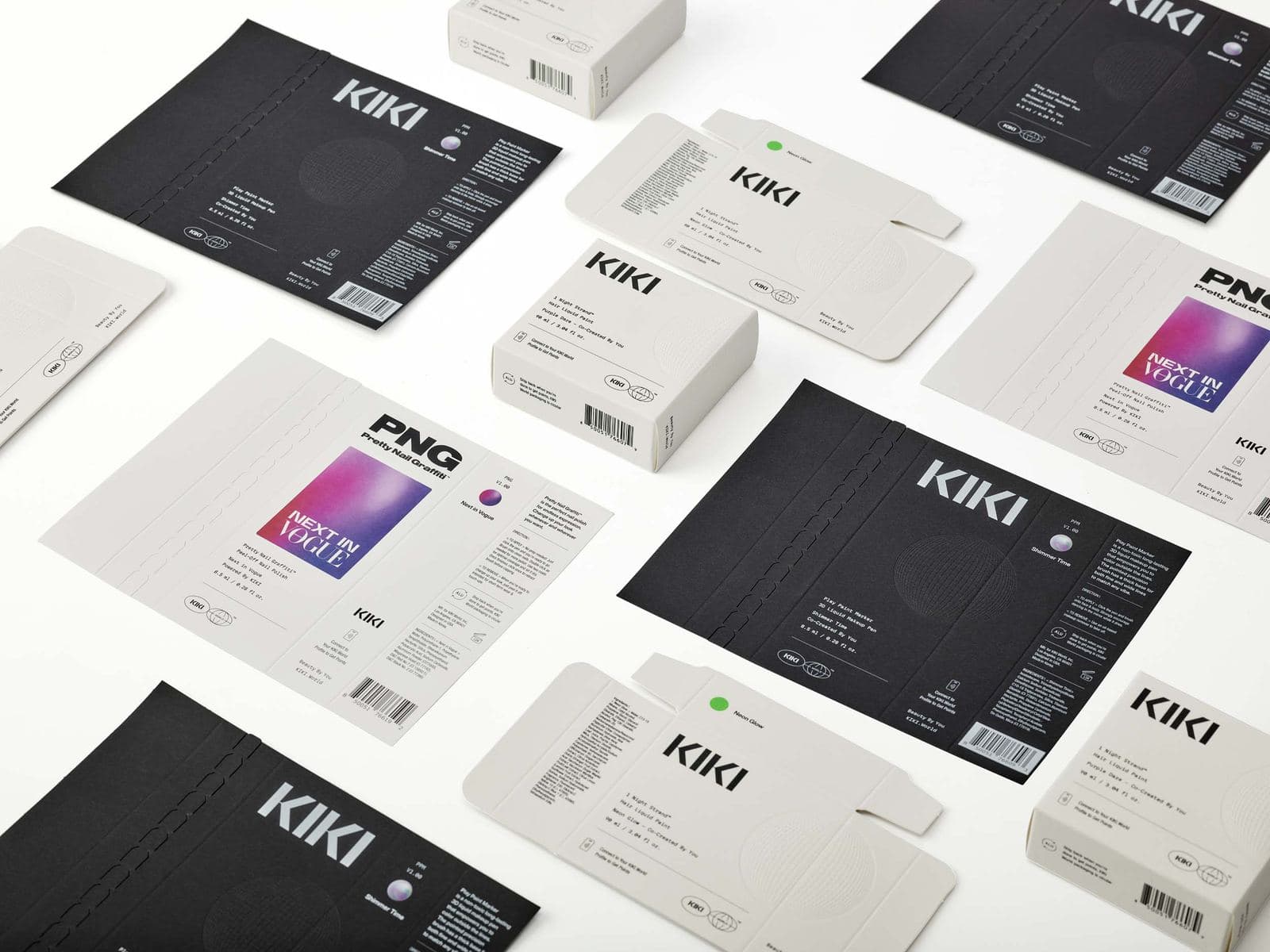
Mono-material and FSC-certified paperboard are two of the most defensible packaging choices on current US and EU recyclability trajectories — each carries its own evidence and claim language requirements.
08.Who owns compliance inside your brand
On early-stage beauty brands, compliance usually sits with the founder by default — which means it does not get owned at all until a problem surfaces. On scaling brands, a clear ownership map prevents the common failure of each function assuming another function is handling the stack.
Suggested RACI
| Compliance area | Owner | Consult |
|---|---|---|
| FDA 21 CFR 701 labeling, MoCRA registration | Regulatory / QA | Marketing, contract manufacturer, outside counsel |
| FTC Green Guides, ECGT, CMA green-claims review | Marketing / Legal | Packaging partner, outside counsel |
| SB 54, SB 343, EU PPWR packaging obligations | Operations / Packaging | Legal, EPR consultant, Logic Pac |
| Prop 65 substrate / ink / closure screening | Operations / Packaging | Logic Pac, suppliers, outside counsel on actives |
| EU and UK Responsible Person labeling | Regulatory | Specialist RP service, legal |
| UFLPA supply-chain diligence | Legal / Procurement | Packaging and formula suppliers, outside counsel |
| Certification chain-of-custody (FSC, BPI, C2C) | Packaging / Marketing | Certifying body, Logic Pac |
What Logic Pac does vs. where outside counsel is appropriate
Logic Pac runs three specific pre-print reviews on luxury and prestige programs: SB 54 recyclability treatment per component, FTC Green Guides treatment of any environmental language, and Prop 65 screening of substrates, inks, and finish stacks. The approach is detailed in our Luxury Beauty Packaging System guide. For deeper regulatory work — MoCRA registration, EU responsible-person obligations, UFLPA diligence, enforcement response, or novel-claim defensibility — we route the issue and recommend qualified counsel. Packaging operators are not regulatory counsel and brands that treat them that way take unnecessary risk.
Bottom line
Beauty packaging compliance is not one rule — it is twelve overlapping frameworks that apply differently per SKU and market. The brands that stay out of trouble map the three variables (where you sell, what you claim, which component is at risk) at concept stage, keep supplier documentation centralized and current, and review the stack on a cadence instead of reacting to inquiries. Logic Pac handles the SB 54, FTC Green Guides, and Prop 65 screening that lives at the packaging layer. The frameworks above the packaging layer sit with the brand’s regulatory, legal, and marketing functions — and above a certain exposure, with outside counsel. This guide is the orientation. The spokes are where the operational work gets done.
09.The 10-item compliance-readiness scorecard
Run this scorecard once per SKU before the pack goes to print, and again before any new-market launch. If more than two or three items come back with hesitation, the SKU is not launch-ready — it needs a focused compliance workstream before production.
Deep-dive spokes and related references
This guide is the orientation layer. For the deep operational work in each framework, open the appropriate spoke below.
- SB 54 packaging compliance for beauty brands — the 2027 window, primary/secondary/tertiary audit, and the 5-step operational action plan.
- EU PPWR packaging requirements for beauty brands — full obligation set, 2026/2030/2035/2040 timeline, and PPWR vs SB 54 contrast.
- Sustainable beauty packaging: what actually works vs greenwashing — the defensible-claim lens across PCR, FSC, mono-material, and refillable systems.
- PCR packaging for beauty brands — what PCR percentages actually mean, supplier verification, and regulatory recognition.
- Mono-material packaging design — the design-engineering spoke for the recyclability-by-design claim.
- Sustainable Beauty Packaging Playbook — the full Claims Hygiene Framework (specific, substantiated, jurisdictionally safe) and the broader certifications map.
- Sustainable Packaging Decision Matrix — how to score claim defensibility as one dimension against cost, formula fit, consumer behavior, and MOQ for a specific SKU.
- Luxury Beauty Packaging System — the pre-print SB 54, FTC Green Guides, and Prop 65 screening workflow Logic Pac runs on luxury programs.
- Retail-Ready Beauty Packaging — how compliance obligations intersect with Sephora, Ulta, and Target vendor-manual requirements.
Quick answers
Common questions founders and marketing leads ask when they first encounter the compliance stack. For the deeper framework-specific detail, open the spoke articles above.