The sustainable packaging decision matrix.
Most sustainability conversations in beauty start with the material. They should start with the question. There are seven real sustainability levers for a packaging program, five dimensions that decide which lever wins, and one SKU-specific answer. Here is the matrix we use with clients to find it.
How do you pick between PCR, mono-material, refill, molded fiber, and reduction for one SKU?
Score the top candidate levers against five dimensions — formula compatibility, landed cost, claim defensibility, consumer adoption risk, and timeline/MOQ feasibility — weighted by brand stage and channel. The lever that wins on paper is the one you prototype first; the one that scores second is the one you keep on standby. The matrix is a filter against single-lever thinking, not a universal ranking.
What to know
- There are seven sustainability levers worth considering, not one.
- Which lever wins is a function of formula, channel, claim, and timeline — not aesthetics.
- The highest-scoring lever is often the second thing a brand would have picked unaided.
- A second-best path on standby is the single most reliable way to protect a launch date.
01.Why a matrix, not a mandate
Most sustainability conversations in beauty default to a single lever — usually PCR, sometimes refill, sometimes molded fiber — and work backwards from there. That works when the lever is right for the SKU. It is also how brands end up with 30% PCR bottles that leach into the formula, refill systems with 12% adoption, and “mono-material” packaging whose closures and labels break the stream.
The Logic Pac approach treats sustainability as a portfolio of competing levers, scored for a specific product in a specific channel against a specific claim. Our Sustainable Beauty Packaging Playbook explains what each lever is and roughly what each one costs. This guide is the decision instrument you run after reading it. The Playbook teaches the levers; the Matrix picks between them.
The output of the matrix is not a single answer. It is a ranked short list with a defensible rationale, a cost and timeline estimate, and a documented second-best path to activate if the first one slips.
- The seven sustainability levers worth comparing (not just PCR vs. refill)
- The five dimensions every lever gets scored on
- How to weight the dimensions by brand stage, channel, and claim
- A worked example of one serum SKU scored across three paths
- Common winning levers by scenario, and the hard disqualifiers that override the score
- The 10-question scorecard you can run on your next SKU
02.The seven sustainability levers
These are the levers that actually move the sustainability profile of a beauty packaging program. Each one maps to a pillar of the Logic Pac Sustainability Framework: Recycled Content, Circular Design, Biodegradable Materials, and Recyclability. The Matrix compares them head to head rather than treating any one as the default answer.
| # | Lever | Pillar | Where it tends to win |
|---|---|---|---|
| 1 | Reduction / lightweighting | Recyclability | Post-launch programs with established brand credibility; apparel-adjacent and premium categories where primary pack has done its job (see Artilect example below) |
| 2 | Recycled content (PCR / PIR) | Recycled Content | High-volume primary pack where formula compatibility is proven and recovery infrastructure exists for the resin |
| 3 | Mono-material design | Recyclability | Secondary pack and some primary pack where decoration, closures, and labels can be kept in one material family |
| 4 | Refillable systems | Circular Design | Prestige skincare and fragrance with repeat-purchase economics and a channel that supports returns or in-store refill |
| 5 | Reusable formats | Circular Design | Travel sets, limited editions, and gifting programs where the outer carton has a second life beyond unboxing |
| 6 | Molded fiber / FSC | Biodegradable Materials | Trays, inserts, and secondary packaging where protection and premium feel can coexist with paper pulp |
| 7 | Compostable & bio-based | Biodegradable Materials | Narrow use cases where industrial composting infrastructure is accessible or the pack is secondary; rarely the right answer for primary pack today |
For the deeper breakdown of each lever — what it is, how it fails, and roughly what it costs — cross-link into the specific pieces: PCR packaging, mono-material design, refillable playbook, and material decision framework.
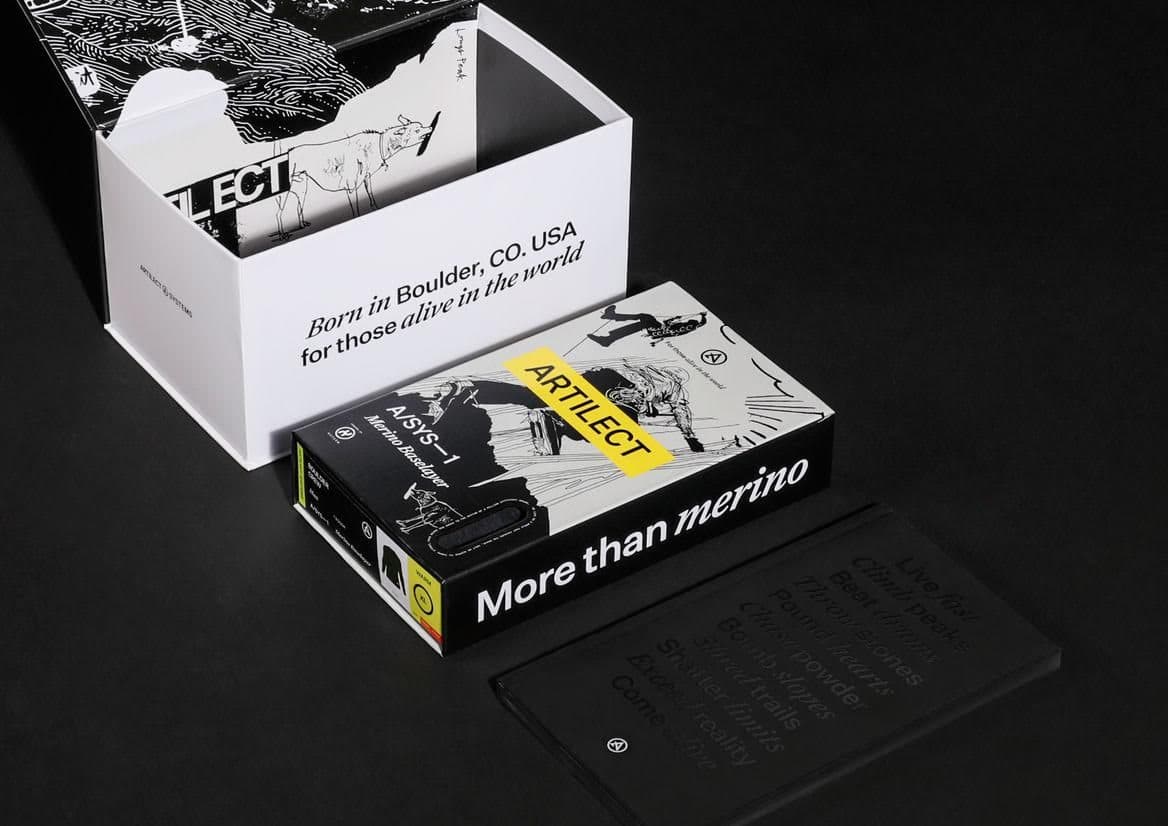
The lightweighting lever done well. The Artilect packaging reduction case transitioned a premium rigid box to an engineered folding carton once the brand had done its launch work — cutting packaging cost ~20% and material ~95% without downgrading the brand signal. Reduction is a lever most sustainability conversations skip because it looks less “green” than refill or PCR. It is often the highest-leverage move.
03.The five scoring dimensions
Every lever gets scored on the same five dimensions, 1–5, where 5 is “this lever is a clear fit for this SKU on this dimension.” The dimensions are deliberately operational. They do not score how “green” a lever feels — they score whether it can actually ship.
1. Formula compatibility
Does the lever's material family work with the formula? PCR resin can leach plasticizers into oil-based serums. Molded fiber struggles with any wet or oily primary. Clear PET loses clarity when scratched by refill cycles. This dimension kills more candidate levers than any other, and it is the first filter for a reason. The Material Decision Framework is the reference here.
2. Landed cost delta
Modeled against the current pack baseline, in landed terms. Unit cost, tooling amortization, freight, warehousing, and reject-run risk — not just the quoted carton price. A refill system with a $0.55 refill looks cheap until you include the heavier primary base and the two-cycle breakeven. A luxury rigid or paper-over-board sustainable system typically lands around a 15% premium over the standard custom-packaging range for the equivalent format and volume; molded fiber tooling runs 8–12 weeks with a 15–30% per-unit premium on comparable formats.
3. Claim defensibility
Can the sustainability claim this lever enables survive FTC Green Guides scrutiny and California SB 54 and EU PPWR trajectory? A “recyclable” claim on a pack that does not have local recovery infrastructure for a “substantial majority” of consumers is the single most common failure mode. Logic Pac offers an SB 54 recyclability review, an FTC Green Guides claims review, and Prop 65 substrate and ink screening on luxury packaging programs. See our beauty packaging claims & compliance guide for the full regulatory map, or our SB 54 compliance and EU PPWR pieces for the specific regulatory detail.
4. Consumer adoption risk
If the lever requires the consumer to do something — return a refill, sort correctly, bring a bottle, use industrial composting — what is the realistic adoption rate for the channel? Refillable systems reach 35–55% repeat-use rates in mature categories; below 40% they often fail the unit economics test. For the full refill business case, see the Beauty Refillable Playbook.
5. Timeline & MOQ feasibility
Does the lever fit the launch date and the first-year volume? Molded fiber tooling and custom aluminum components are 8–12 week items at minimum. A full luxury beauty packaging program — brief in to launch out — runs 16–24 weeks for custom tooling. Supplier qualification on PCR and bio-based resins adds another cycle. The concept-to-shelf timeline is the reference.
04.How to weight by brand stage and channel
The five dimensions are not equal weight for every brand. A pre-launch indie prestige brand weights claim defensibility and consumer adoption risk very differently from a mass retail replenishment program at 10× the volume. The matrix uses four quick weighting profiles. Pick one, or blend two if the brand sits between them.
| Weighting profile | Formula fit | Landed cost | Claim defensibility | Adoption risk | Timeline & MOQ |
|---|---|---|---|---|---|
| Pre-launch indie prestige | 3× | 1× | 3× | 2× | 1× |
| Scaling DTC / omnichannel | 2× | 3× | 2× | 2× | 1× |
| Mass retail replenishment | 2× | 3× | 3× | 1× | 1× |
| Prestige retail with hero SKU | 3× | 1× | 2× | 2× | 2× |
These weights are intentionally simple. The point is not perfect decimals; it is to force an argument about which dimensions actually matter for this brand right now. In practice, two brands running the same lever can get very different scores — and that is the point.
05.Worked example — one serum SKU, three paths
A scaling DTC prestige skincare brand is launching a 30ml hero serum. The brand wants a defensible sustainability story, has a $2.80 per-unit all-in packaging budget baseline, and is launching into Sephora as a priority channel 20 weeks out. Three plausible levers surface in the first conversation:
- Path A: 30% PCR PET primary with FSC paper secondary and foil decoration
- Path B: Aluminum primary with FSC paper secondary (refill-ready architecture, no refill at launch)
- Path C: Clear glass primary with molded fiber tray, mono-paper secondary, no foil
| Dimension (weight) | Path A — 30% PCR + FSC | Path B — Aluminum + FSC | Path C — Glass + molded fiber |
|---|---|---|---|
| Formula fit (2×) | 3 (PCR compatibility must be verified) | 5 (aluminum is barrier-neutral) | 5 (glass is formula-safe) |
| Landed cost (3×) | 4 (~5% premium) | 2 (~20% premium with tooling) | 2 (glass freight + breakage) |
| Claim defensibility (2×) | 3 (claim depends on local PCR recovery) | 4 (aluminum is well-understood) | 5 (glass + paper is the most defensible) |
| Adoption risk (2×) | 5 (no behavior change) | 5 (refill-ready without requiring refill) | 4 (shipping breakage risk) |
| Timeline & MOQ (1×) | 4 (standard PET tooling) | 3 (aluminum lead time 8–12 wk) | 2 (molded fiber tooling 8–12 wk plus glass qualification) |
| Weighted total | 34 | 30 | 31 |
Path A wins for this brand, this launch window, this budget. Path C is the stronger long-term claim and becomes the right answer at the next volume tier when freight and breakage economics change. Path B is documented as the backup if the PCR supplier cannot verify resin provenance at the required quality tier — the brand already has an aluminum-compatible closure spec drafted so switching does not reset the project.
The matrix did two useful things. It eliminated the “just go glass” instinct for the launch window. And it created a documented reason to activate Path C at the next refresh.

Aluminum is one of the most frequently misjudged levers in the matrix. It scores well on claim defensibility and formula compatibility, but tooling lead times and MOQ pressure can disqualify it for a short launch window — even when it is the long-term right answer.
06.Common winners by scenario
After running the matrix across dozens of beauty programs, patterns emerge. These are the levers that most often win in each scenario — useful as a sanity check, not a shortcut. Always score your SKU.
| Scenario | Most common winning lever | Common second-best |
|---|---|---|
| Prestige skincare, pre-launch, under 25K units | Glass + molded fiber tray + mono-paper secondary | Aluminum + FSC paper |
| Prestige skincare, replenishment, 100K+ units | Refillable aluminum base + replaceable pod | 30%+ PCR PET + FSC |
| Mass color cosmetics, retail | Mono-material PP or PET + print optimization | Reduction / lightweighting |
| Prestige fragrance | Glass + reusable outer + reduction on gift sets | Refillable glass base |
| Haircare, DTC subscription | Refillable (pouch or pod) + FSC secondary | Lightweighted HDPE + PCR |
| Holiday gift sets | Reusable outer + reduction + mono-paper inner | Molded fiber tray + FSC secondary |
| Post-launch brand with mature packaging | Reduction / lightweighting | Mono-material secondary + PCR primary |
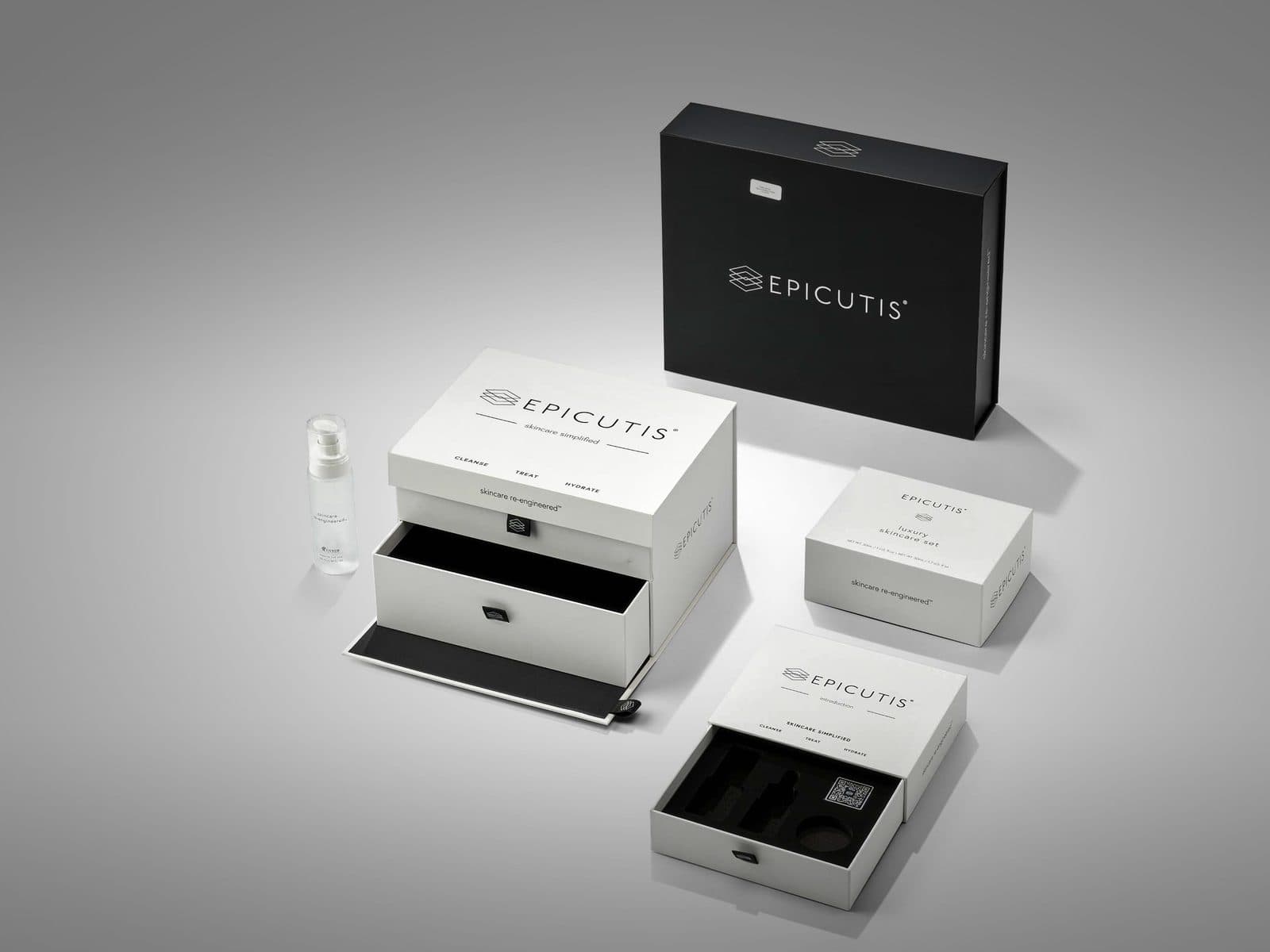
Molded fiber trays punch above their weight for prestige skincare because they resolve two dimensions at once: protection for a fragile primary pack and a visible, defensible sustainability signal. Trays like these are a cornerstone of Logic Pac's Biodegradable Materials pillar.
07.Hard disqualifiers — override the score
A high score does not override a disqualifier. These are the conditions under which a lever should be eliminated even if it tops the weighted total.
- Formula incompatibility. PCR resin with a formula that fails compatibility testing. Non-negotiable.
- Prop 65 flag on substrate or ink. Any component triggering Prop 65 warnings without a mitigation path. Logic Pac screens substrates and inks before this becomes a label problem.
- No local recovery infrastructure for the claim. A “recyclable” claim where fewer than a substantial majority of consumers have access to recovery is an FTC risk, not a sustainability win.
- Refillable without refill economics. A refill system where the model does not clear two-cycle breakeven at the expected adoption rate. See the refillable playbook.
- Mono-material broken by decoration or closure. A “mono-material” claim with a mixed-resin pump, a foil overlay, or an incompatible label adhesive is not mono-material. See mono-material design.
- Lead time cannot support the launch window. A lever that cannot ship by the launch date is not a candidate for the launch. It may be the right next step.
- MOQ well above launch volume with no sequencing plan. Pre-ordering four years of inventory to hit a minimum is not a sustainability win.
08.Where the matrix gets you in trouble
The matrix is a filter against single-lever thinking. It is also easy to misuse. These are the four most common ways brands run the scorecard and get a confidently wrong answer.
Scoring from the finished pack instead of the SKU
The matrix is a per-SKU tool. Running it once at the brand level and applying the output across every SKU family produces predictable misfires: hero skincare does not have the same answer as a color SKU or a travel set.
Using supplier-marketing weights
If the weighting profile puts a 4× on claim defensibility because a supplier’s marketing deck ranked it that way, the matrix will reliably pick the lever that supplier sells. Pick weights before scoring. Pick them against the brand's own stage and channel reality, not vendor materials.
Ignoring the second-best path
The point of the backup is to protect the launch date. A matrix that produces one winning path and no documented alternative is a matrix one phone call away from a reset. Always document the second-best lever, the component spec, and the switching cost before pilot.
Running the matrix once and never again
The winning lever for a 2026 launch is often not the winning lever for a 2028 replenishment at 5× the volume. Re-run at every meaningful inflection: new SKU family, new channel, new regulatory milestone, 20%-plus volume shift.
09.The 10-question scorecard
Run this scorecard once per candidate lever for a given SKU. If a lever answers “yes” to fewer than 7 of the 10 questions, it is not a candidate for pilot — it is a candidate for the long-term roadmap.
Bottom line
Sustainability in beauty packaging is not a material choice. It is a lever choice, scored against the SKU, the channel, and the claim. The brands that get it right pick a top lever, protect it with a documented second-best path, and re-run the matrix at every inflection. We help brands run this scoring, qualify the suppliers, and ship the pack — and we see the discipline pay out in defect rate, reprint rate, and program longevity.
Related guides and references
The Decision Matrix is designed to be run alongside, not instead of, the deeper material and lever guides. These are the primary cross-references used in the sections above.
- Sustainable Beauty Packaging Playbook — what each sustainability lever is and roughly what it costs.
- Beauty Packaging Material Decision Framework — per-material cost, MOQ, lead-time, and recovery data referenced in dimensions 1 and 2.
- Beauty Refillable Playbook — the full refill unit-economics case and the 35–55% repeat-rate benchmark referenced in dimension 4.
- Concept-to-Shelf Timeline — the standard 12-week and extended luxury 16–24-week timelines referenced in dimension 5.
- PCR packaging for beauty brands — verification and compatibility detail behind the PCR lever.
- Mono-material packaging design — decoration and closure constraints behind the mono-material lever.
- SB 54 packaging compliance — the regulatory reference behind the claim-defensibility dimension.
- EU PPWR packaging requirements — the EU regulatory reference behind the staged 2030/2035/2040 trajectory.
- Artilect packaging reduction case study — the reduction / lightweighting lever as a live Logic Pac program.
Quick answers
Common questions brand managers ask when they first encounter the matrix. For the deeper material, refill, PCR, mono-material, and compliance detail, start with the related guides above.
Running the Matrix on Your Program
Not sure which lever wins for your next SKU?
Logic Pac runs the Decision Matrix on real programs every week. If you want a second read on the top two candidate paths for your product, your channel, and your claim, request a packaging audit.